

Concepts: modulus, conjugate, Argand plane and quadratic roots
Complex Numbers and Quadratic Equations24 min readLesson 3 of 5
3.1 Modulus as a distance
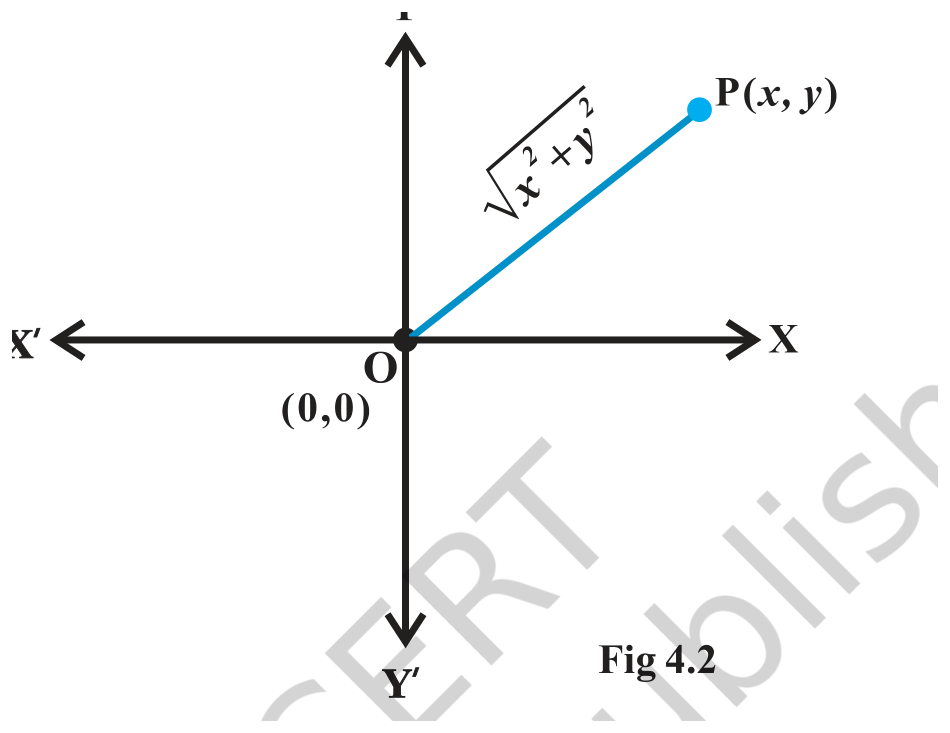
The modulus of z equal to a plus i b is the square root of a squared plus b squared, written with two vertical bars. So the modulus of 3 + 4i is 5, and the modulus of 2 - 5i is the square root of 29. The modulus is never negative. It equals zero only for the complex number zero.
The geometric meaning is the distance from the origin to the point representing z. Because the point has coordinates (a, b), Pythagoras gives the formula at once. The modulus of a difference of two complex numbers gives the distance between their points, a fact used in geometry questions.
Three properties follow quickly. The modulus of a product is the product of the moduli, the modulus of a quotient is the quotient of the moduli, and the modulus of a conjugate equals the modulus of the original. The modulus of a sum is at most the sum of the moduli, with equality only when the two points lie on the same ray.
3.2 Conjugate and its rules
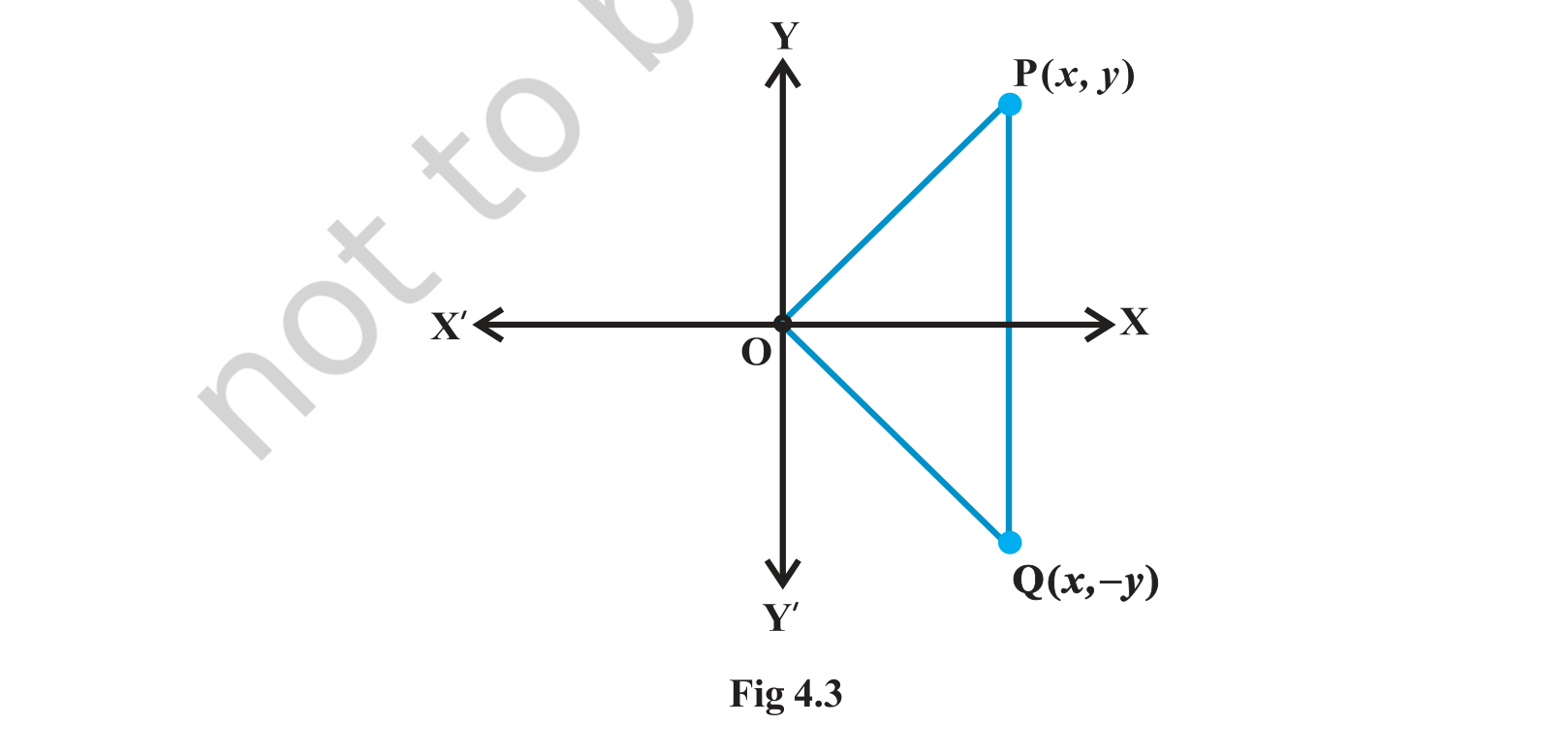
The conjugate of z equal to a plus i b is a minus i b. It is the mirror image in the real axis. The product of a number and its conjugate is always a non-negative real number, equal to the modulus squared. That is the reason the conjugate clears denominators.
Rules for conjugates are simple to state. The conjugate of a sum is the sum of the conjugates, and the conjugate of a difference is the difference of the conjugates. The conjugate of a product is the product of the conjugates, and the conjugate of a quotient is the quotient of the conjugates. A number that equals its own conjugate must be real, because its imaginary part has to be zero.
Questions such as finding x and y when one side is the conjugate of another use this rule. Expand the product, take the conjugate of the right side, and then compare real and imaginary parts to get two equations.
3.3 The Argand plane
In the Argand plane, the complex number a plus i b is the point (a, b). The horizontal axis is the real axis and the vertical axis is the imaginary axis. Real numbers lie on the horizontal axis, pure imaginary numbers lie on the vertical axis, and every other complex number sits in one of the four quadrants.
This picture makes several results obvious. The modulus is the distance from the origin, so every complex number with a fixed modulus lies on a circle centred at the origin. The conjugate is the reflection in the real axis, so a number and its conjugate are mirror images. The sum of two complex numbers completes a parallelogram with the two points and the origin, because addition is vector addition.
A typical exercise asks you to plot a list of complex numbers. Plot the real part horizontally and the imaginary part vertically, and label each point. If the question adds a scalar multiple or a combination, compute the new complex number first and then plot it.
Slideshow, slide 1 of 3. Use the left and right arrow keys to change slides and the space bar to play or pause.
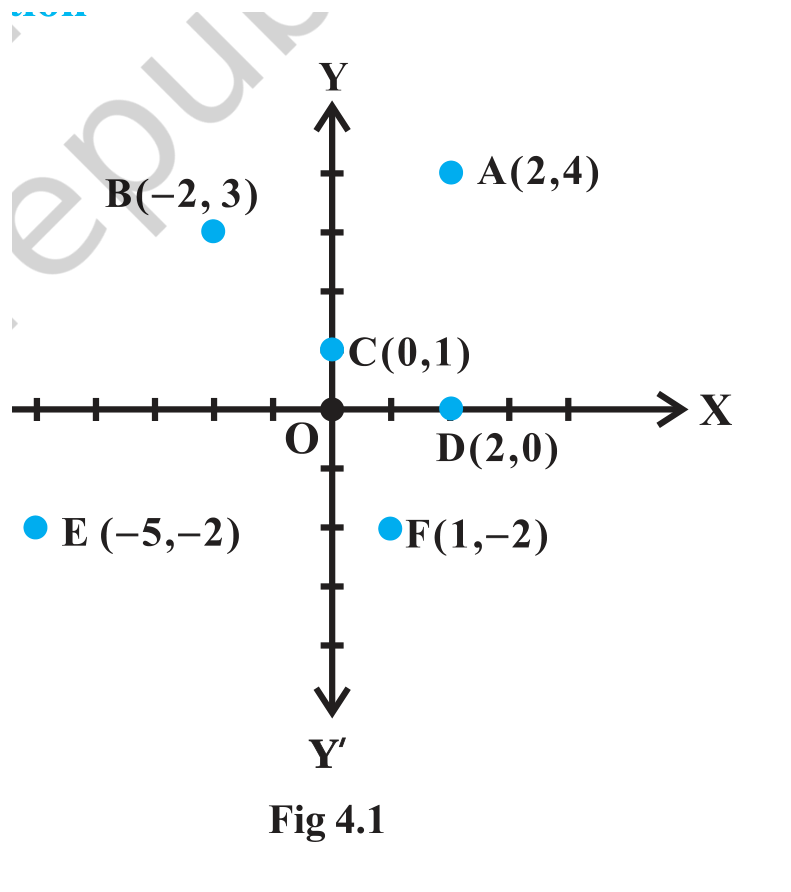
Argand plane with points A to F plotting complex numbers such as 2 + 4i, minus 2 + 3i and 1 minus 2i
3.4 Quadratic equations with complex roots
The chapter title pairs complex numbers with quadratic equations, and the link is the discriminant. For a x squared plus b x plus c equals 0 with real coefficients, compute D equal to b squared minus 4ac. If D is positive the two roots are real and distinct, if D is zero they are real and equal, and if D is negative the square root in the quadratic formula carries an i, so the roots are a conjugate pair.
For example, x squared minus 4x plus 13 equals 0 has D equal to 16 minus 52, which is minus 36. The square root of minus 36 is 6i, so the roots are (4 plus or minus 6i) by 2, that is 2 plus 3i and 2 minus 3i. When the coefficients are real, the two complex roots always appear as a conjugate pair, and their sum equals minus b by a while their product equals c by a.
This is the statement that the quadratic formula works even when the discriminant is negative, provided the square root is read in the complex system. Questions frequently give one complex root and ask for the equation; use the conjugate as the other root and expand the product of the factors.
3.5 Miscellaneous exercise patterns
The miscellaneous exercise mixes the ideas. Question 5 uses z1 equal to 2 minus i and z2 equal to 1 plus i and asks for a sum of quotients and products; simplify each quotient with the conjugate method, then add the results. Question 8 asks for real x and y when a product equals a conjugate; compare parts after expanding. Question 9 asks for the modulus of a ratio of two complex fractions; simplify the fraction first and take the modulus at the end.
Question 14 uses the expression (1 plus i) over (1 minus i) raised to m and asks for the least positive m that makes it purely real. Simplify the base first, which gives i, and then use the powers of i. The least positive m that makes i to the m real is 2, because i squared equals minus 1.
The recurring method is the same across the exercise set: simplify to standard form, use the conjugate to remove denominators, then apply modulus or compare parts. Keep the last line in standard form, since marks are given for the format as much as the value.
Tip
If a question says a complex number lies on the real axis, its imaginary part is zero. If it lies on the imaginary axis, its real part is zero. If it lies on the circle of radius r, its modulus equals r. Translate the geometry into one of these three algebra conditions.