

Concepts: The central neural system and the human brain
Neural Control and Coordination26 min readLesson 3 of 5
3.1 Protection of the brain and the spinal cord
The brain and the spinal cord form the central neural system, and they are the most protected organs of the body. The brain sits inside the skull and the spinal cord runs inside the vertebral column. Around the brain there are three membranes called the cranial meninges: an outer dura mater, a very thin middle arachnoid, and an inner pia mater that lies in contact with the brain tissue. Between the membranes there is cerebrospinal fluid, which cushions the brain against shocks and also carries nutrients and removes wastes. The same fluid fills the spaces called ventricles inside the brain and the central canal of the spinal cord, and it exchanges materials with the blood through a specialised region.
3.2 The forebrain
The brain is divided into three main parts: the forebrain, the midbrain and the hindbrain. The forebrain consists of the cerebrum, the thalamus and the hypothalamus, and it also includes the limbic system. The cerebrum is the largest part of the brain and is divided into two cerebral hemispheres that are joined by a thick band of nerve fibres called the corpus callosum. Its outer layer is the cerebral cortex, which contains the cell bodies of neurons and therefore looks grey, and it is folded into many ridges and grooves so that a large surface fits inside the skull. The inner part is white matter, made of the myelinated axons that connect different regions. The cerebral cortex is the seat of higher functions such as thinking, memory, reasoning, voluntary movement and the interpretation of sensation, and its different areas carry out different tasks.
The thalamus is a large egg shaped structure that acts as the main relay station for sensory impulses coming from the body towards the cerebral cortex, and it also sorts and directs the impulses to the right area. The hypothalamus lies below the thalamus and is much smaller, but it controls many basic drives: it regulates body temperature, hunger and thirst, and it influences the pituitary gland, which lies just beneath it. The limbic system is a ring of structures around the thalamus and hypothalamus, and it is associated with emotions such as fear, anger and pleasure, with sexual behaviour and with motivation.
3.3 The midbrain and the hindbrain
The midbrain lies between the forebrain and the hindbrain. Its dorsal part carries four round swellings called the corpora quadrigemina, which are concerned with visual and auditory reflexes, and its ventral part contains fibre tracts that connect the higher centres with the lower ones.
The hindbrain comprises the pons, the cerebellum and the medulla oblongata. The pons carries fibre tracts that connect different parts of the brain, and it also contains centres that help regulate respiration. The cerebellum is a large folded structure below the cerebrum, and it is responsible for the coordination of movement, the maintenance of posture and the balance of the body; it compares the commands sent to the muscles with the information coming back from the body and corrects errors. The medulla oblongata is the lowest part of the brain and it joins the spinal cord. It contains the centres that control respiration, the cardiovascular reflexes and gastric secretions, which is why an injury to this region is so dangerous.
3.4 The spinal cord and reflex action
The spinal cord is a long cylinder of nervous tissue inside the vertebral column. In section it shows an inner grey matter shaped like a butterfly, containing cell bodies, and an outer white matter containing nerve fibres. It carries impulses to and from the brain and it also produces reflex actions, which are quick, automatic responses that do not wait for the brain to decide. A reflex arc is the path followed by the impulses: a receptor detects the stimulus, an afferent neuron carries the signal to the spinal cord, an interneuron passes it on, an efferent neuron carries the command to the muscle, and the muscle contracts. The knee-jerk reflex is a familiar example, because the tap on the tendon produces a quick extension of the lower leg through the spinal cord without any conscious decision.
3.4.1 The working of the whole system
The parts of the brain do not act in isolation. The spinal cord carries a reflex out even before the brain has been informed, and at the same time it sends a copy of the sensory signal upward. The thalamus relays that copy to the cortex, the cortex relates it to memory and decides what the sensation means, and the limbic system adds the emotional colour. The hypothalamus and the medulla keep the internal conditions steady in the background, and the cerebellum corrects the movement as it happens. A single act such as touching a hot pan therefore uses the spinal cord, the brain stem, the cerebrum and the cerebellum together, and the speed of the withdrawal comes from the spinal reflex while the feeling of pain and the memory of it come from the higher centres.
Slideshow, slide 1 of 3. Use the left and right arrow keys to change slides and the space bar to play or pause.
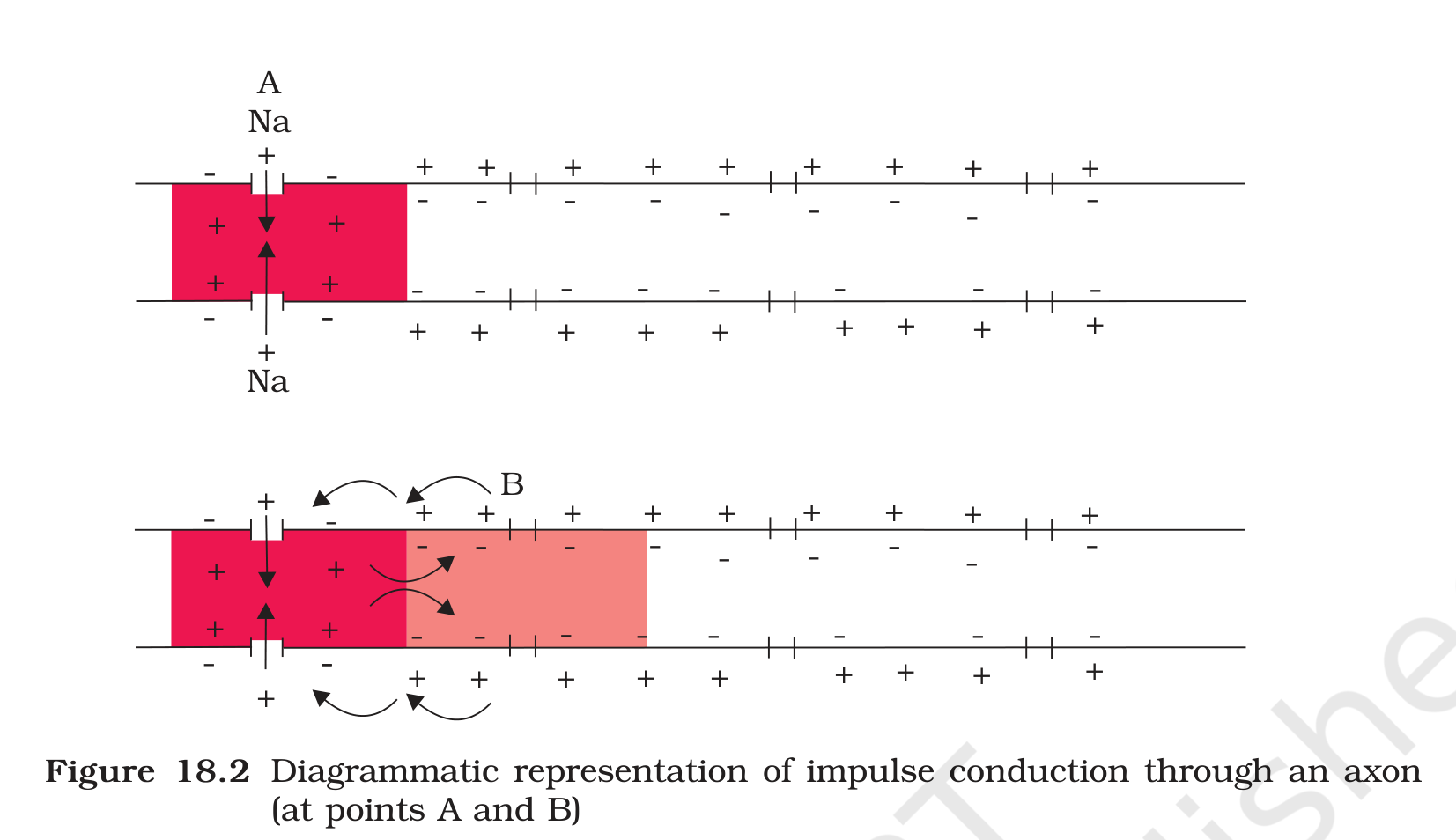
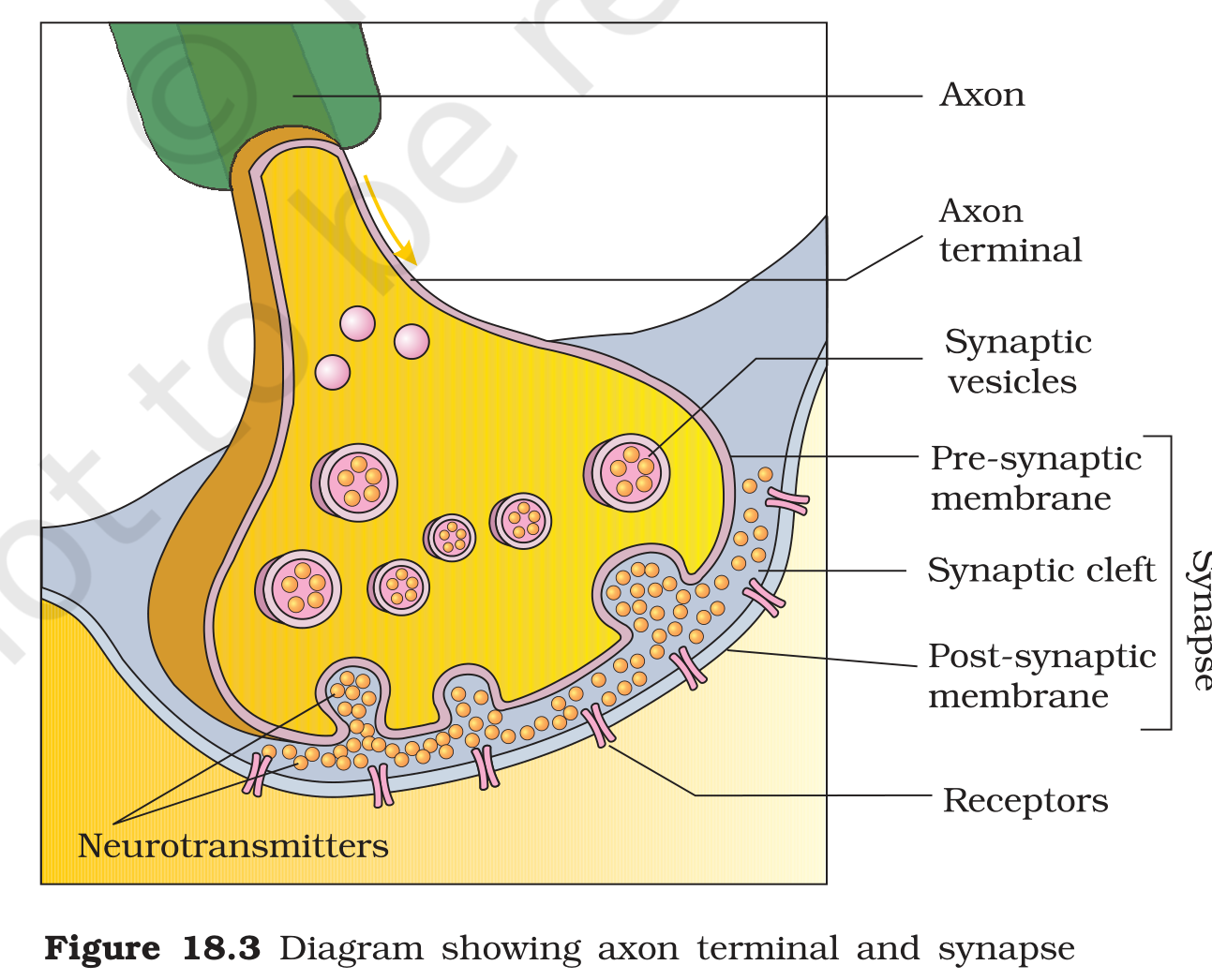
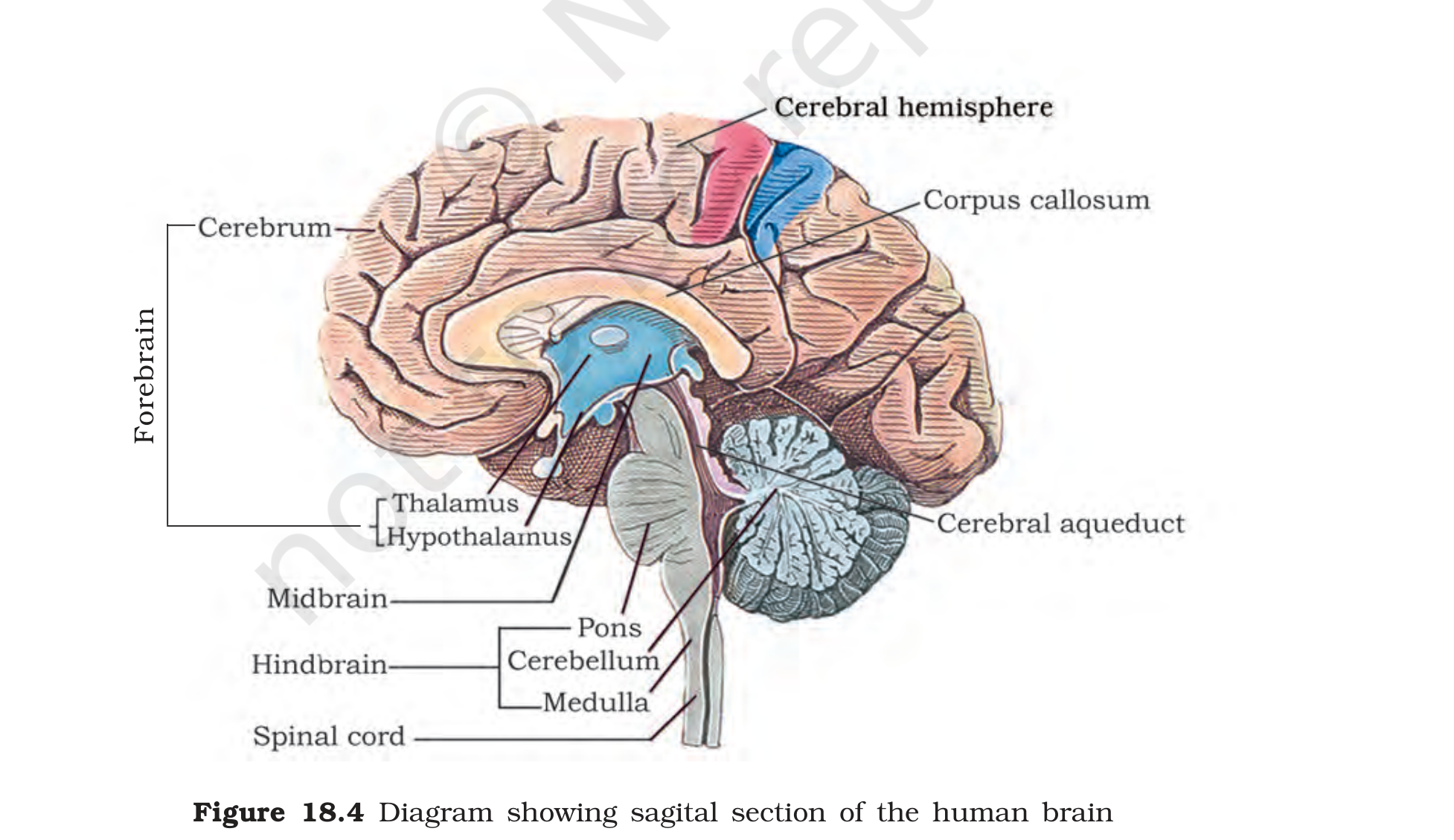
Figure 18.2: diagrammatic representation of impulse conduction through an axon at points A and B
Exam
For the brain answer, use three headings and give the parts and one function for each. Forebrain: cerebrum for higher functions, thalamus for sensory relay, hypothalamus for temperature, hunger, thirst and pituitary control, limbic system for emotion. Midbrain: corpora quadrigemina for visual and auditory reflexes. Hindbrain: pons for fibre tracts and respiration, cerebellum for coordination, posture and balance, and medulla oblongata for respiration, cardiovascular reflexes and gastric secretions. For reflex action, draw the five neuron arc from receptor to muscle.
Common mistake
Do not place the cerebellum in the forebrain, because it belongs to the hindbrain. Do not say that the thalamus controls body temperature, since that is the hypothalamus. Do not confuse the grey and white matter of the brain with those of the spinal cord, because in the brain the grey matter is outside and the white matter inside, while in the spinal cord the arrangement is reversed. Do not say that a reflex action needs the brain to decide first.