

Concepts: Biodiversity and how much of it exists
Biodiversity and Conservation17 min readLesson 1 of 6
1.1 A word for variety
The living world is rich beyond easy description. Ants alone number more than 20,000 species, beetles about 3,00,000, fishes 28,000 and orchids nearly 20,000. The word biodiversity was popularised by Edward Wilson for the combined variety found at every level of biological organisation.
1.2 Three levels
Genetic diversity is variation within a single species across its range. In the medicinal plant Rauwolfia vomitoria of the Himalaya, the amount and strength of the active chemical reserpine vary from range to range. Rice in India comes in more than 50,000 genetically distinct strains, and mango in about 1,000 varieties.
Species diversity is variety at the level of species. The Western Ghats, for example, hold more amphibian species than the Eastern Ghats.
Ecological diversity is variety at the ecosystem level. In India you find coral reefs, mangroves, rain forests, deserts, estuaries, wetlands and alpine meadows, a far wider range than a country such as Norway offers.
This diversity took millions of years to build, and at present rates of species loss it could be lost within a few centuries. That is why biodiversity and its conservation are treated as international environmental issues.
1.3 Counting species
We know how many species have been recorded and named, but not how many exist. The IUCN estimate for described plant and animal species is slightly more than 1.5 million. How many remain to be discovered is not known, and many estimates are educated guesses. Since most undiscovered species live in the tropics and temperate inventories are more complete, biologists compare the temperate and tropical richness of a well-studied insect group and extrapolate the ratio to other groups. Extreme estimates reach 20 to 50 million species, while Robert May's more conservative and scientifically sound figure is about 7 million.
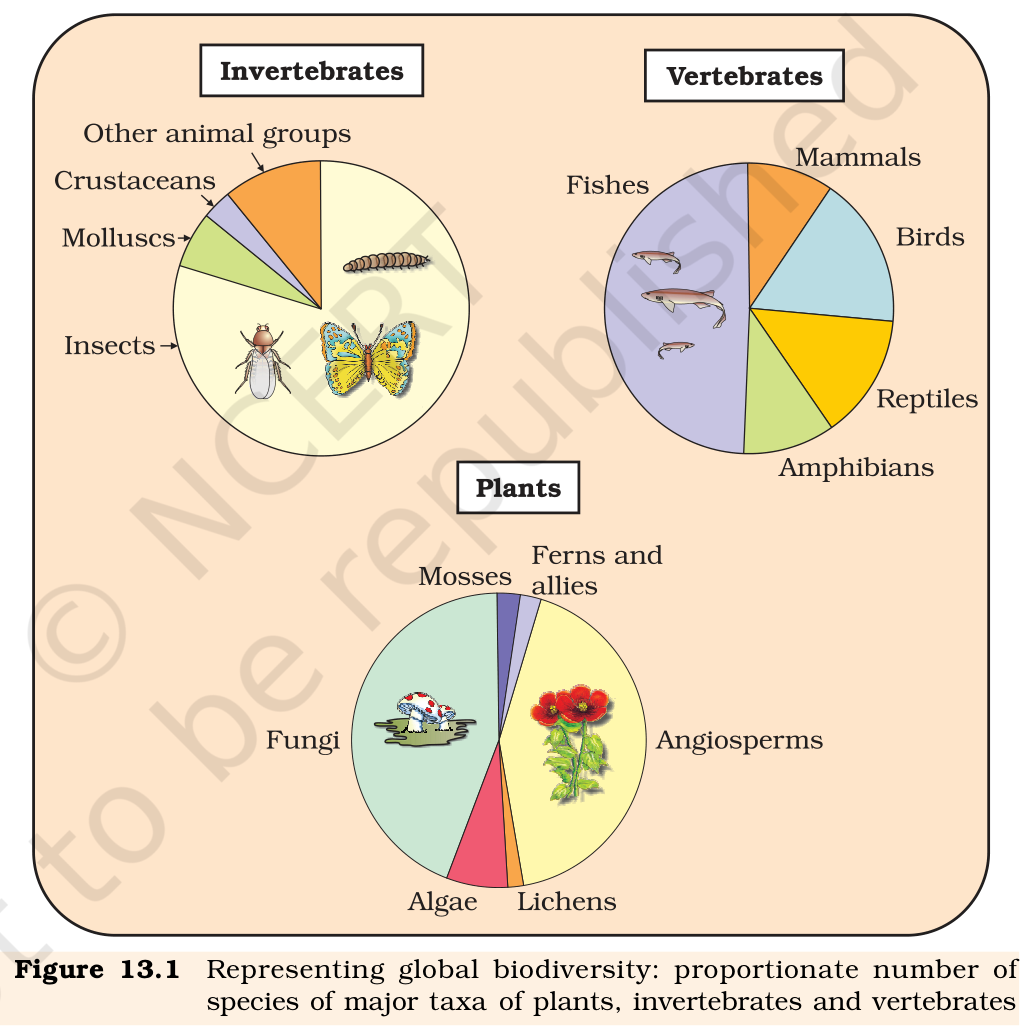
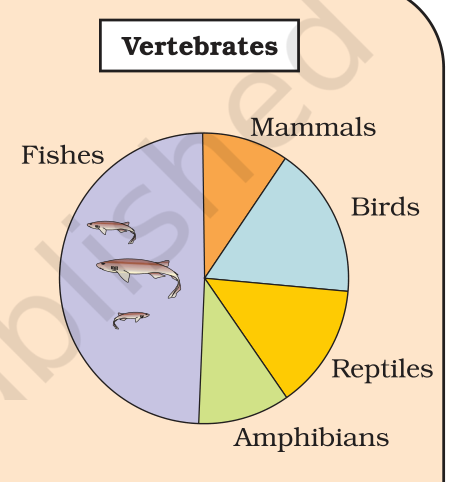
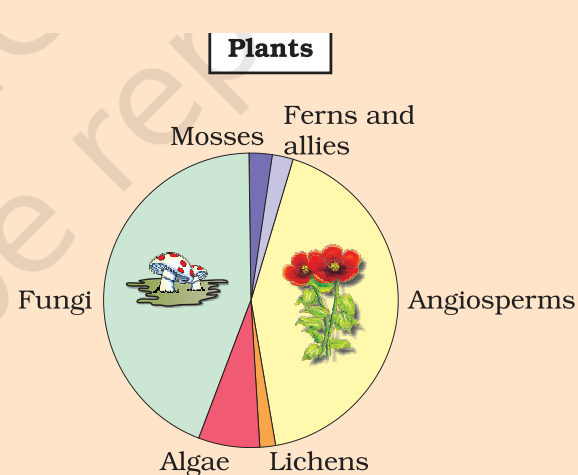
Animals form more than 70 per cent of recorded species. Plants, algae, fungi, bryophytes, gymnosperms and angiosperms together make up no more than 22 per cent. Insects dominate the animals, with more than 70 per cent of the total, so seven animals in ten are insects. The number of fungus species alone exceeds the combined total of fishes, amphibians, reptiles and mammals. These estimates leave out prokaryotes, because ordinary taxonomic methods do not work well for microbes and many species cannot be cultured in the laboratory. If molecular and biochemical criteria are used, prokaryote diversity could run into millions.
1.4 India's share
India has only 2.4 per cent of the world's land area but holds 8.1 per cent of global species diversity, which makes it one of the 12 megadiverse countries. Nearly 45,000 plant species and about twice as many animal species have been recorded from India. If May's estimate that only about 22 per cent of species have been recorded so far is applied, India may still hold more than 1,00,000 undiscovered plant species and more than 3,00,000 animal species. The inventory is nowhere near complete, and many of these species may vanish before they are named.
1.5 Why counting is harder than it sounds
Counting is hard partly because many species are unknown, and partly because the search methods themselves are uneven. A taxonomist working on birds in a well-surveyed country adds fewer new names each year than one working on insects or fungi in a tropical forest. This makes any global total a projection from partial data, not a count. The point is worth remembering in an exam answer: the estimate depends on the group studied and the ratio assumed, which is why the range from 7 million to 50 million is so wide.
1.6 The three levels in one place
The three levels are not alternatives; they describe different scales of the same variety. A country can be rich at the ecosystem level yet poor in species if its habitats are few and harsh. Another can hold great genetic variation inside a handful of crops while its natural ecosystems are already gone. Conservation has to work at all three, because saving a species without its habitat and its genetic variety leaves only a museum specimen. This is why the chapter treats the levels together before moving to patterns and losses, and why conservation plans usually name all three, since a plan that drops one level leaves the other two weaker.
Slideshow, slide 1 of 3. Use the left and right arrow keys to change slides and the space bar to play or pause.
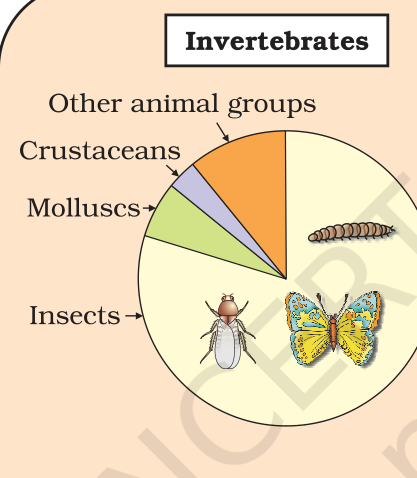
A pie chart of invertebrate diversity, with insects forming the largest slice, followed by molluscs, crustaceans and other groups.