Concepts: Biotechnological applications in agriculture
Biotechnology and its Applications20 min readLesson 1 of 5
1.1 Three routes to more food
Farm output can grow along three routes: agriculture built on agrochemicals, organic agriculture, and crops that carry engineered genes. The Green Revolution tripled the food supply, yet it still could not keep up with a growing population. Better varieties helped, but most of the gain came from better management and from fertilisers and pesticides. For farmers in poorer countries those inputs are often too costly, and conventional breeding has little left to offer in the way of further yield.
1.2 Tissue culture and micropropagation
When conventional breeding fell behind demand, tissue culture offered a faster route. From the 1950s scientists knew that a whole plant can be regenerated from an explant, which is simply a piece cut from a plant and raised in a test tube on a sterile nutrient gel. The capacity of a single cell or explant to give rise to a whole plant is called totipotency. The medium must supply sugar as the carbon source (sucrose will do), mineral salts, vitamins, amino acids, and growth regulators from the auxin and cytokinin families. Thousands of plants can be raised this way in a short time, a method called micropropagation. Every plant produced is genetically identical to the parent, so they are somaclones. Tomato, banana and apple are among the food plants grown commercially by this method.
Tissue culture also rescues healthy plants from diseased ones. A plant infected with a virus still has a meristem, the growing tip or axillary bud, that stays free of the virus. Growing that meristem in vitro gives virus-free plants, and meristems of banana, sugarcane and potato have been cultured this way.
1.3 Somatic hybridisation
Single cells from a plant can be taken, their walls digested away, and the naked protoplasts used for fusion. If two varieties each carry a useful character, their protoplasts can be fused to make a hybrid protoplast that grows into a plant. Such plants are somatic hybrids and the technique is somatic hybridisation. A tomato protoplast fused with a potato protoplast produced a pomato plant, but it lacked the full set of useful characters and was never commercialised.
1.4 Genetically modified crops
An organism that has been given altered genes by human manipulation is a genetically modified organism, or GMO. GM plants have helped agriculture in several ways. They tolerate abiotic stresses such as cold, drought, salt and heat. They cut dependence on chemical pesticides because pest-resistant varieties need fewer sprays. They reduce post-harvest losses, improve the efficiency with which plants use minerals so soil fertility lasts longer, and raise nutritional value, as golden rice does by supplying more vitamin A. GM technology also makes tailor-made plants that supply starches, fuels and pharmaceuticals to industry.
1.5 Bt toxin and Bt cotton
The bacterium Bacillus thuringiensis, Bt for short, makes a protein that kills certain insects. Some strains kill lepidopterans such as the tobacco budworm and armyworm, some kill coleopterans such as beetles, and some kill dipterans such as flies and mosquitoes. During a particular phase of growth the bacterium forms protein crystals that hold a toxic protein. The toxin harms the insect and not the bacterium because it is stored in an inactive form, called a protoxin. When an insect eats the inactive toxin, the alkaline pH of its gut dissolves the crystal and converts the toxin into its active form. The active toxin then binds to midgut epithelial cells, makes pores, and causes the cells to swell and burst, which kills the insect.
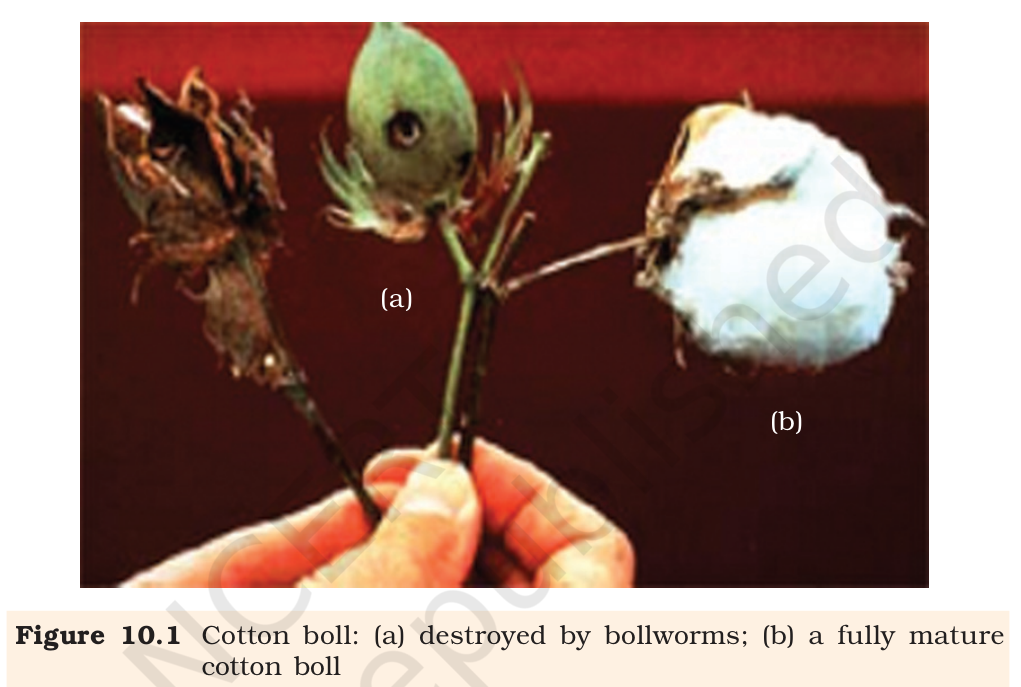
Bt toxin genes were cloned from the bacterium and expressed inside crop plants, so the plant makes its own insecticide (Figure 10.1). Cotton, corn, rice, tomato, potato and soyabean have all been modified in this way. Which gene goes into which crop depends on the target pest, because most Bt toxins act only on one group of insects. The genes are named cry genes. For cotton bollworms the useful ones are cryIAc and cryIIAb, while cryIAb protects against the corn borer.
1.6 RNA interference against nematodes
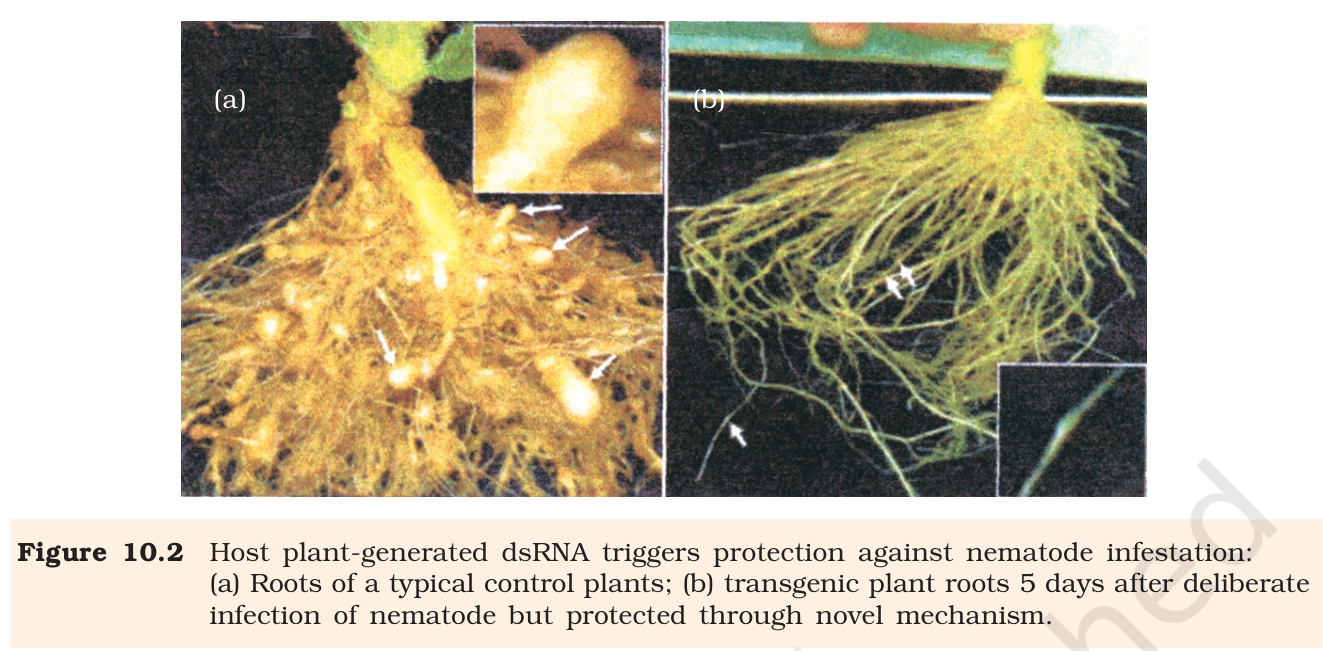
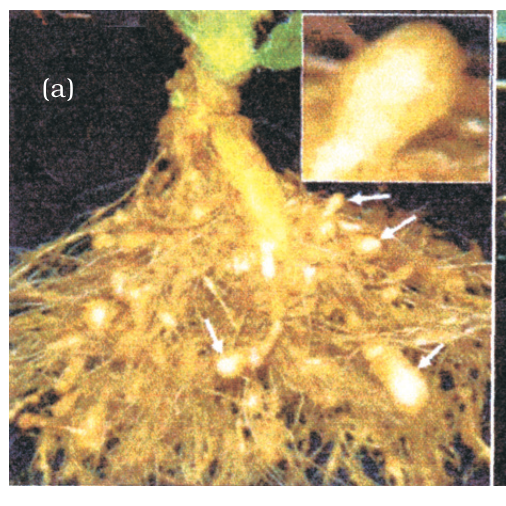
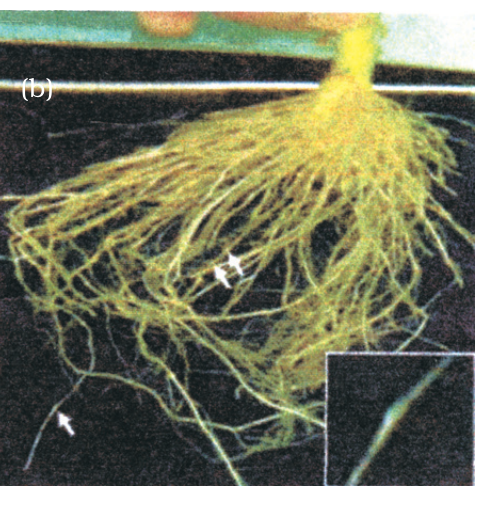
Some nematodes live as parasites on a wide range of plants and animals. One of them, Meloidogyne incognitia, attacks tobacco roots and badly reduces yield. The defence used against it does not need a toxin. It uses RNA interference (RNAi), a defence mechanism that occurs in every eukaryotic organism. There a particular mRNA is silenced: a complementary double stranded RNA, dsRNA, binds it and stops it from being translated. The complementary RNA may come from an infecting RNA virus, or from a transposon that moves through an RNA copy.
Using Agrobacterium vectors, nematode-specific genes were put into the host plant in a way that made the plant cells produce both sense and antisense RNA. The two RNAs, being complementary, paired into dsRNA. That launched RNAi against the nematode mRNA, so the parasite failed to survive in a host which made the interfering RNA, and the plant escaped infestation (Figure 10.2).
1.7 Exam pointers
Keep the answers to three questions ready: how Bt toxin is stored harmlessly, why it becomes active only inside an insect gut, and how RNAi protects a plant without a toxin. A common mistake is to say Bt toxin is always active. Another is to name the bacterium when the question asks for the gene. For tissue culture, the marks sit in the words explant and totipotency.
Slideshow, slide 1 of 4. Use the left and right arrow keys to change slides and the space bar to play or pause.
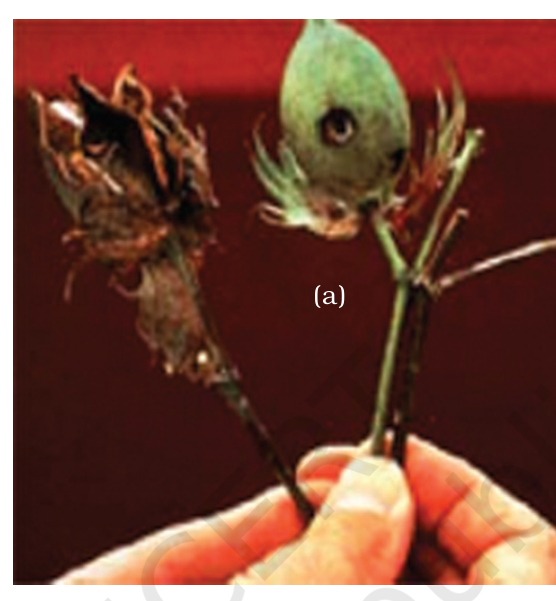
A cotton boll damaged and hollowed out by bollworm larvae, labelled (a).