Methods and worked examples: A Square and a Cube
A Square and a Cube22 min readLesson 2 of 6
2.1 Finding square roots
There are four reliable ways to find or check a square root.
Listing squares. To test 576, list squares near 20^2 = 400: 21^2 = 441, 22^2 = 484, 23^2 = 529, 24^2 = 576. So the square root is 24. This is safe for small numbers but slow for large ones.
Repeated subtraction of odd numbers. A perfect square is a sum of consecutive odd numbers from 1, so subtract 1, 3, 5, ... in turn. For 81, the subtraction reaches 0 after nine odd numbers, so 81 = 9^2 and the square root is 9. The method also detects non-squares: for 38 the subtraction crosses zero without landing on it, so 38 is not a square.
Prime factorisation into two equal groups. Factor the number and try to split the prime factors into two identical groups. For 324: 324 = 2 x 2 x 3 x 3 x 3 x 3, which groups as (2 x 3 x 3) x (2 x 3 x 3) = 18^2. So the square root is 18. For 156 = 2 x 2 x 3 x 13, the 3 and the 13 cannot be paired, so 156 is not a square.
Estimation and narrowing. For 1936, note 1600 < 1936 < 2500, so the root is between 40 and 50. The units digit 6 means the root ends in 4 or 6, so try 44 or 46. Since 45^2 = 2025 is above 1936, the root is below 45; checking 44^2 = 1936 confirms the answer.
2.2 Worked square-root examples
Example 1: 1156. Factor 1156 = 2 x 2 x 17 x 17 = (2 x 17)^2 = 34^2, so the square root is 34.
Example 2: 2800. Factor 2800 = 2^4 x 5^2 x 7. The single 7 cannot be paired, so 2800 is not a square.
Example 3: estimating a non-square. For the square root of 250, use 15^2 = 225 and 16^2 = 256. Since 250 is closer to 256, the root is about 16, and slightly less because 250 < 256.
Example 4: cloth problem. A square cloth has area 125 sq cm. The largest square of whole-number side that fits has side 11 cm, because 11^2 = 121 and 12^2 = 144 is too large.
2.3 Cubic numbers
A cube is a solid with all edges equal and all angles right angles. A cube of edge 2 cm is built from 2 x 2 x 2 = 8 unit cubes. A cube of edge 3 cm needs 27 unit cubes, and a cube of edge 4 cm needs 64.
Multiplying a number by itself three times gives a cube number: n x n x n = n^3. The perfect cubes begin 1, 8, 27, 64, 125, 216, ... The same rules extend to fractions, decimals and negative numbers: (4/6)^3 = 64/216, (13.08)^3 = 2237.810112, and (-6)^3 = -216.
Last digits of cubes run through all ten digits. The cube of a number ending in 2 ends in 8, and the cube of a number ending in 8 ends in 2. A cube cannot end with exactly two zeros: trailing zeros of a cube come in groups of three, so a cube can end in three zeros (1000) or six zeros (1000000), never exactly two.
2.4 Cube roots and factorisation
If y = x^3, then x is called the cube root of y, written with a small 3 on the radical sign. Since 2^3 = 8, the cube root of 8 is 2. Since 15^3 = 3375, the cube root of 3375 is 15.
To test a perfect cube, factorise and look for three identical groups. For 3375 = 3 x 3 x 3 x 5 x 5 x 5 = (3 x 5)^3, the cube root is 15. For 500 = 2 x 2 x 5 x 5 x 5, the 2s cannot form a triplet, so 500 is not a cube. For 10648 = 2^3 x 11^3 = (22)^3, the cube root is 22.
Large cube roots can be estimated from the last digit and the size of the number. The last digit 3 in 4913 suggests a root ending in 7, since 7^3 = 343 ends in 3. Checking 17^3 = 4913 confirms the root.
2.5 Special numbers and patterns
The differences between consecutive cubes are not constant: 8 - 1 = 7, 27 - 8 = 19, 64 - 27 = 37. But the differences of the differences settle down. For the cubes 1, 8, 27, 64, 125, 216 the first differences are 7, 19, 37, 61, 91; the second differences are 12, 18, 24, 30; the third differences are 6, 6, 6. For squares the second differences are constant at 2, matching the degree 2; for cubes the third differences are constant at 6, matching the degree 3.
Consecutive odd numbers build cubes: 1 = 1^3, 3 + 5 = 2^3, 7 + 9 + 11 = 3^3, and so on. Ten consecutive odd numbers from 91 to 109 add to exactly 1000 = 10^3.
Ramanujan noticed that 1729 is the smallest number that is a sum of two positive cubes in two different ways: 1729 = 1^3 + 12^3 = 9^3 + 10^3. Such numbers are called taxicab numbers; the next two are 4104 = 2^3 + 16^3 = 9^3 + 15^3 and 13832 = 2^3 + 24^3 = 18^3 + 20^3.
2.6 A pinch of history
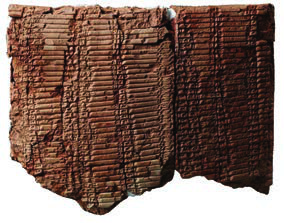
Babylonian clay tablets from about 1700 BCE list squares and cubes for use in land measurement and building. In Sanskrit mathematical texts the word varga was used for a square figure, its area and the square power, while ghana meant both the solid cube and the cube of a number. The word mula, meaning the root of a plant or the basis of something, gave the terms varga-mula and ghana-mula for square root and cube root. Aryabhata, writing in 499 CE, described varga as both the square figure and the product of two equal quantities. That is why the language of roots is tied to plants and to squares.