

Concepts: Adrenal, pancreas and the other hormone producing tissues
Chemical Coordination and Integration24 min readLesson 3 of 6
3.1 The adrenal glands
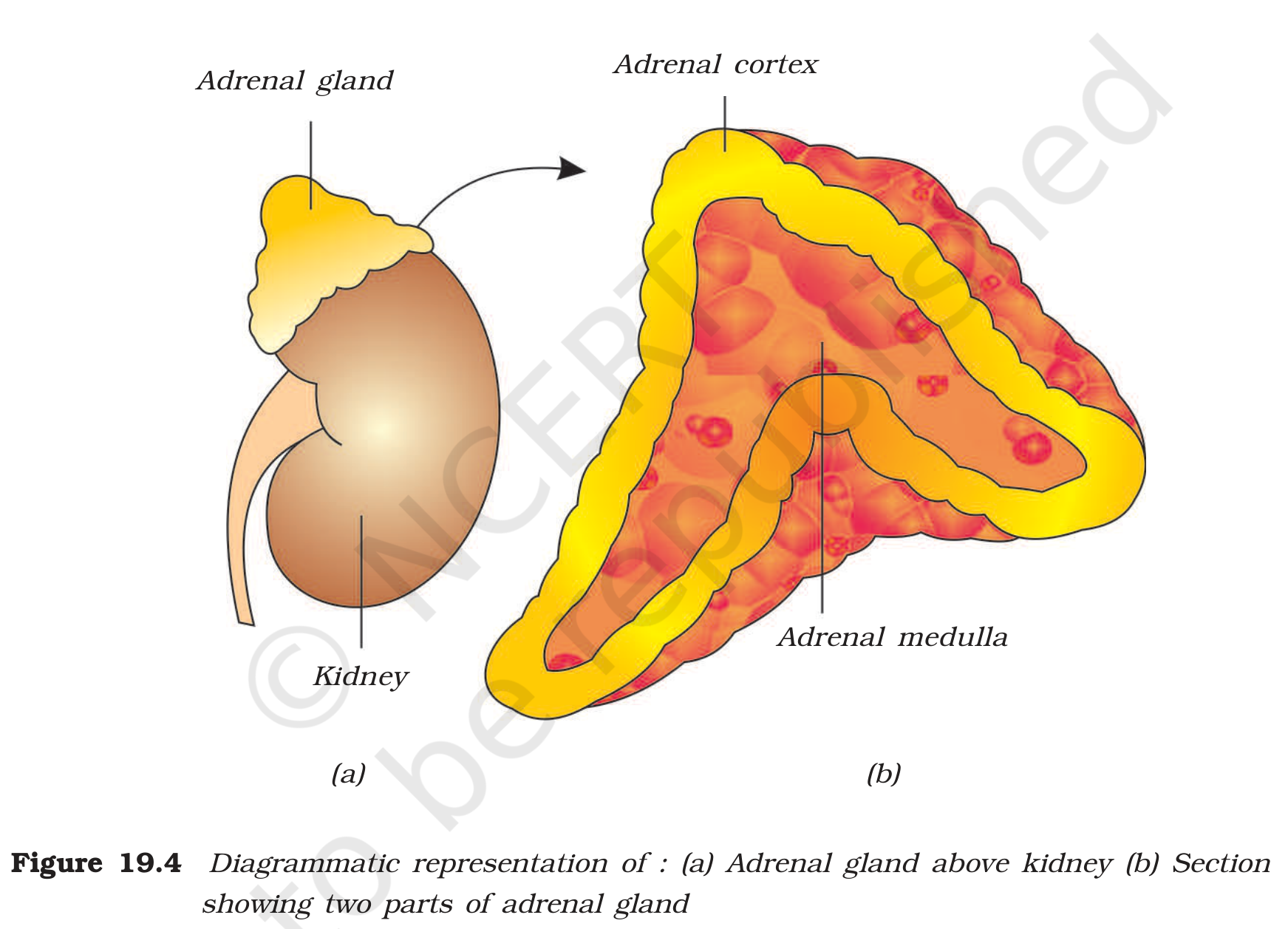
The adrenal glands are a pair of glands situated one on top of each kidney, and each gland has two parts, an outer cortex and an inner medulla. The adrenal cortex secretes two main kinds of corticosteroid hormones.
The glucocorticoids are the hormones concerned with carbohydrate metabolism, and cortisol is the main glucocorticoid in our body. It raises the blood glucose level by promoting the breakdown of proteins and fats into glucose, and it also suppresses the inflammatory response, which is why drugs modelled on cortisol are used to control inflammation. The mineralocorticoids are the hormones concerned with the balance of water and electrolytes, and aldosterone is the main mineralocorticoid. It acts on the distal tubules of the kidney, where it promotes the reabsorption of sodium and water and the excretion of potassium, and in this way it raises the blood volume and the blood pressure. The cortex also produces small amounts of androgens. Insufficient secretion of the cortical hormones leads to Addison's disease, with weakness, low blood pressure and a poor ability to handle stress.
The adrenal medulla secretes two hormones, adrenaline or epinephrine and noradrenaline or norepinephrine, which are together called catecholamines. They are released very quickly in response to stress, and they prepare the body for a sudden effort: the heart beats faster and harder, the breathing becomes quicker, the blood glucose rises and the pupils widen. The rate of the heartbeat, the strength of the heart muscle and the rate of respiration all increase, and the breakdown of glycogen in the liver and the muscle supplies extra glucose for the emergency. This is the fight or flight response, and it is the fastest hormonal response of the body.
3.2 The pancreas
The pancreas is a composite gland that lies in the abdomen, and it has an exocrine part and an endocrine part. The exocrine part is made of acini that secrete the digestive enzymes, and these reach the intestine through a duct. The endocrine part consists of the islets of Langerhans, which are scattered groups of cells in the pancreas, and these are of two main cell types. The alpha cells secrete glucagon, and the beta cells secrete insulin.
Insulin is a hypoglycaemic hormone, meaning that it lowers the blood glucose level. It acts on the cells of the body and increases the uptake of glucose by them, and it also promotes the conversion of glucose into glycogen in the liver and the muscle, so the extra glucose is stored instead of remaining in the blood. Glucagon is a hyperglycaemic hormone, and it acts in the opposite direction: it promotes the breakdown of glycogen into glucose in the liver and raises the blood glucose level. The two hormones work as a pair and keep the blood glucose steady. A deficiency of insulin, or a failure of the cells to respond to it, causes diabetes mellitus, in which glucose passes out in the urine and the person becomes thirsty and passes large volumes of urine.
3.3 The gonads, thymus and other tissues
The testis is the male gonad. Its Leydig cells, also called interstitial cells, secrete a group of hormones called androgens, of which testosterone is the main one. Androgens control the development of the male reproductive organs and the male secondary sexual characters such as the deep voice, the beard and the muscular build. The ovary is the female gonad and it secretes two groups of hormones, the estrogens and the progesterone. Estrogens control the development of the female reproductive organs and the female secondary sexual characters, and progesterone supports the preparation of the uterus for pregnancy and the maintenance of pregnancy.
The thymus is a gland in the upper chest that is large in childhood and becomes smaller in adults. It secretes the peptide hormones called thymosins, which help in the development of cell mediated immunity by maturing the T lymphocytes. The heart's atria secrete atrial natriuretic factor, or ANF, which lowers the blood pressure by widening the blood vessels and by increasing the excretion of sodium in the urine. The kidney secretes erythropoietin, which stimulates the formation of red blood cells. The gut secretes four major peptide hormones, gastrin, secretin, cholecystokinin and gastric inhibitory peptide, and these control the digestive juices and the movements of the intestine.
3.3.1 Practice from the NCERT exercises, questions 3, 5 and 6
Exercise 3 (part). The adrenal cortex gives cortisol and aldosterone, while the adrenal medulla gives adrenaline and noradrenaline. The pancreas gives insulin and glucagon. The testis gives androgens, the ovary gives estrogens and progesterone, the thymus gives thymosins, the atrium gives atrial natriuretic factor, the kidney gives erythropoietin, and the gut gives gastrin, secretin, cholecystokinin and gastric inhibitory peptide.
Exercise 5. Androgens control the male reproductive organs and secondary sexual characters. Estrogens control the female reproductive organs and secondary sexual characters. Insulin lowers blood glucose and glucagon raises it.
Exercise 6. A hyperglycaemic hormone is glucagon and a hypoglycaemic hormone is insulin. A hypercalcaemic hormone is parathyroid hormone. The gonadotrophic hormones are luteinizing hormone and follicle stimulating hormone. The progestational hormone is progesterone. The blood pressure lowering hormone is atrial natriuretic factor. The androgens include testosterone and the estrogens include estradiol.
Exam
Keep the adrenal answer split into cortex and medulla. Cortex: glucocorticoids such as cortisol for carbohydrate metabolism and the anti-inflammatory effect, mineralocorticoids such as aldosterone for sodium and water balance, and a small amount of androgens. Medulla: adrenaline and noradrenaline for the fight or flight response, with the faster heart, faster breathing and higher blood glucose. For the pancreas, contrast insulin as hypoglycaemic with glucagon as hyperglycaemic, and link their deficiency or excess to diabetes mellitus.
Common mistake
Do not say that the adrenal cortex and medulla secrete the same hormones, because the cortex makes steroids and the medulla makes catecholamines. Do not call insulin a hyperglycaemic hormone or glucagon a hypoglycaemic one. Do not say that the islets of Langerhans are the exocrine part of the pancreas, because the acini are exocrine and the islets are endocrine. Also do not forget that ANF lowers blood pressure while aldosterone raises it through sodium retention.