

Concepts: Mechanism of hormone action and exercise practice
Chemical Coordination and Integration24 min readLesson 4 of 6
4.1 Receptors decide the response
A hormone is present in the blood in very small amounts, yet it can produce a large and specific effect. It does this by binding to a receptor, and the location of the receptor divides hormones into two groups. Protein and peptide hormones are water soluble and cannot cross the lipid membrane of the cell, so their receptors are on the outer surface of the membrane. Steroid hormones are lipid soluble and can pass through the membrane, so their receptors are inside the cell. In both cases the receptor is specific: only a cell that carries the matching receptor is a target cell for that hormone.
4.2 Protein hormones and second messengers
When a protein hormone binds its receptor on the membrane, the receptor changes shape and passes the message inward. The hormone itself does not enter the cell, so the message has to be carried by a molecule made inside the cell. Such an intracellular molecule is called a second messenger, and cyclic AMP, or cAMP, is the classical example. The activated receptor makes an enzyme produce cAMP from ATP, and cAMP then activates other enzymes in the cell. Those enzymes speed up or slow down particular chemical reactions, and the final result is the physiological response, such as the breakdown of glycogen or the movement of glucose into the cell. Because one hormone molecule can start a cascade that produces many cAMP molecules, a very small amount of hormone can produce a large response, and because the messenger is destroyed quickly, the response stops soon after the hormone is removed.
4.3 Steroid hormones and gene expression
A steroid hormone enters the target cell and binds an intracellular receptor, forming a hormone-receptor complex. This complex enters the nucleus and binds to a specific region of the DNA. The binding switches on particular genes, which are copied into mRNA, and the mRNA is translated into proteins. The new proteins then carry out the response. Because the effect depends on making new proteins, it develops more slowly than the second messenger response, but it lasts longer. This is one reason steroid hormones such as cortisol are used for effects that must persist for hours, while protein hormones such as insulin act within minutes.
The two mechanisms also explain why a protein hormone has to be injected rather than swallowed, since a protein would be digested in the gut, while many steroid hormones can be taken by mouth because they survive the digestive process.
4.4 Exercise practice
The chapter has one exercise section with nine questions, and the remaining ones are collected here.
Exercise 6. A hyperglycaemic hormone is glucagon and a hypoglycaemic hormone is insulin; a hypercalcaemic hormone is parathyroid hormone; the gonadotrophins are luteinizing hormone and follicle stimulating hormone; the progestational hormone is progesterone; the blood pressure lowering hormone is atrial natriuretic factor; androgens include testosterone and estrogens include estradiol.
Exercise 7. Diabetes mellitus is due to a deficiency of insulin. Goitre is due to a deficiency of iodine, which is needed to make thyroid hormones. Cretinism is due to a deficiency of thyroid hormones during pregnancy and infancy.
Exercise 8. Follicle stimulating hormone acts on the gonads. In the female it stimulates the growth and development of the ovarian follicles, and in the male it supports spermatogenesis. It works through a membrane receptor and a second messenger inside the target cell, and it prepares the follicle for the later surge of luteinizing hormone that triggers ovulation.
Exercise 9. Thyroxine matches the thyroid; parathyroid hormone matches the parathyroid; gonadotrophin releasing hormone matches the hypothalamus; and luteinizing hormone matches the pituitary.
Slideshow, slide 1 of 3. Use the left and right arrow keys to change slides and the space bar to play or pause.
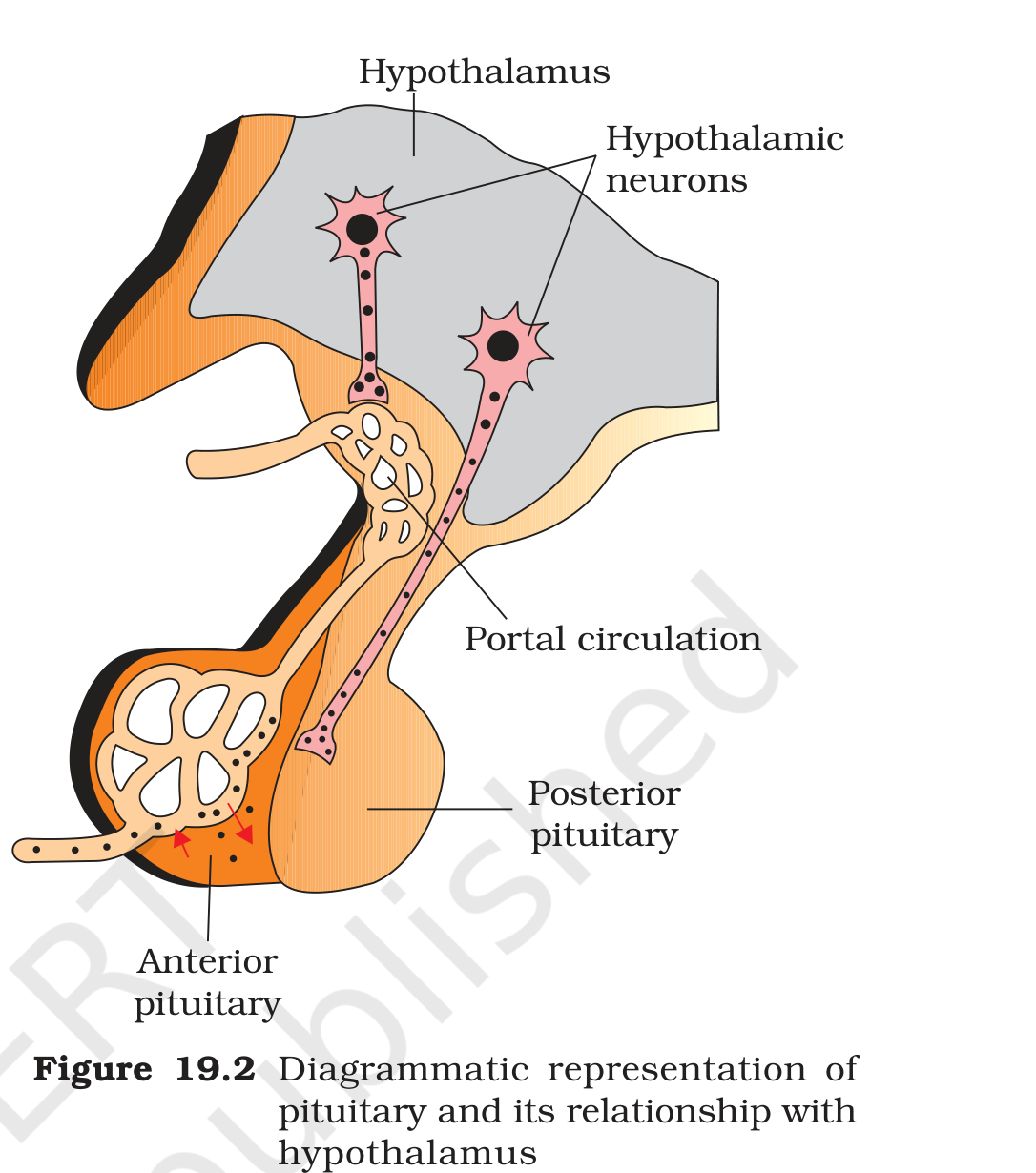
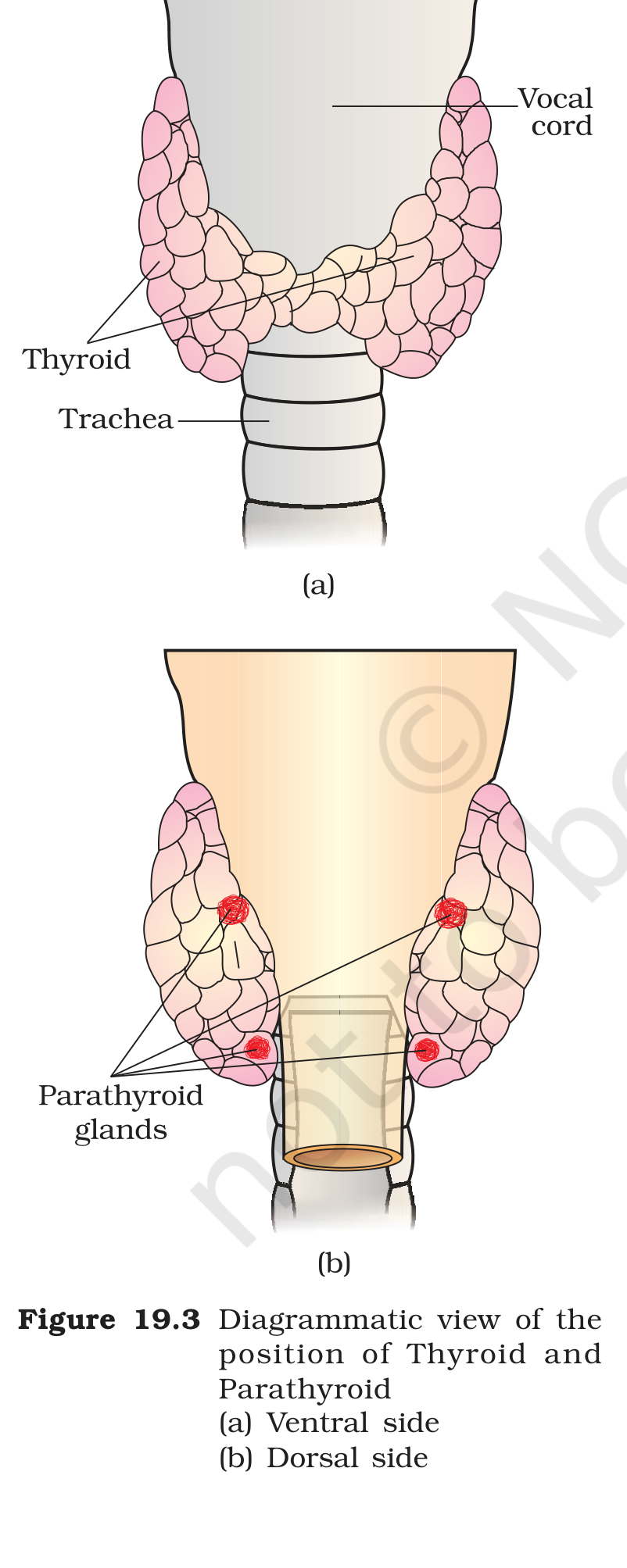
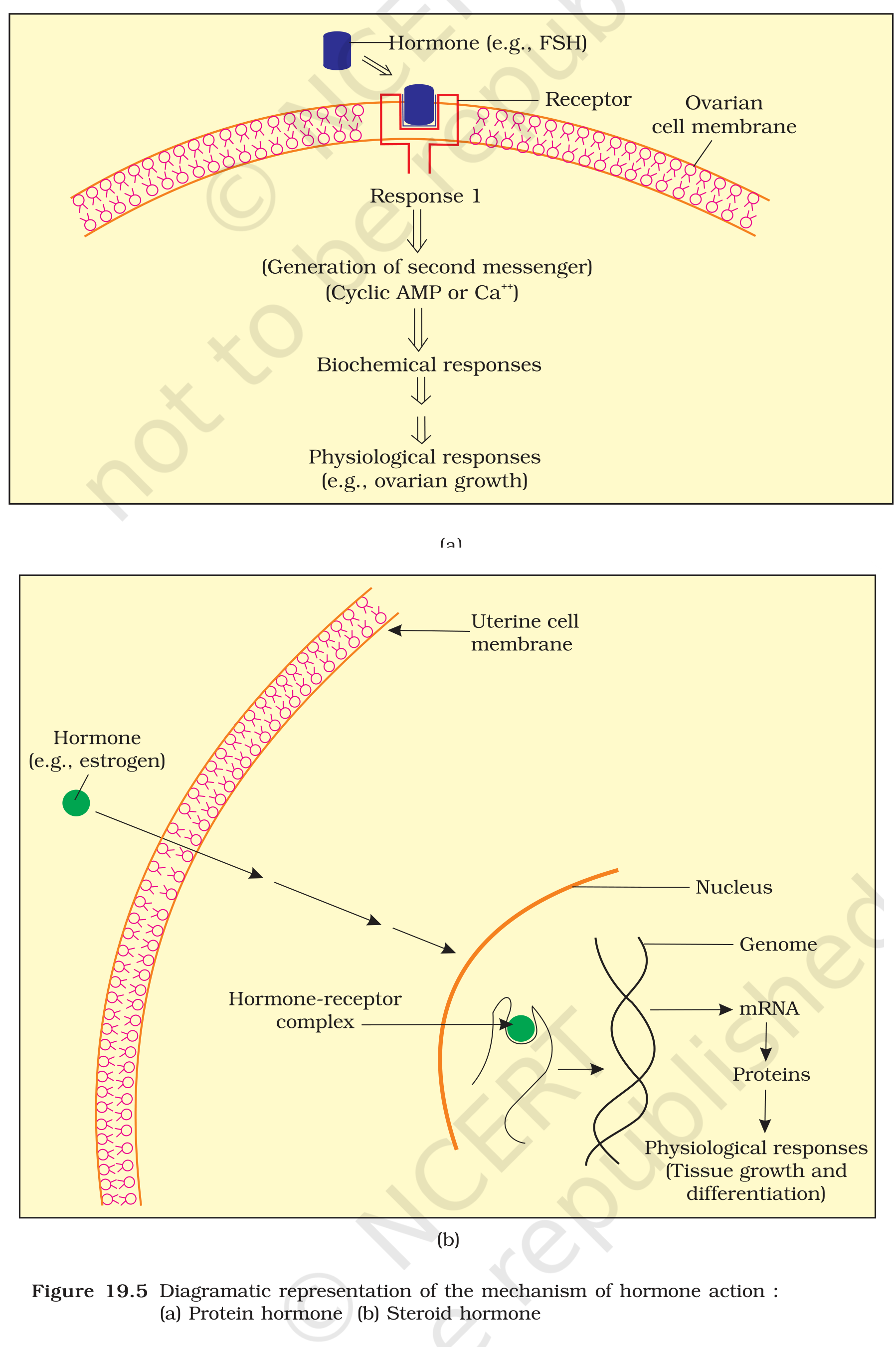
Figure 19.2: diagrammatic representation of the pituitary and its relationship with the hypothalamus, showing the hypothalamic neurons, portal circulation, anterior pituitary and posterior pituitary
Exam
The mechanism answer must name the location of the receptor first, because that decides the rest. Protein hormone: receptor on the membrane, hormone does not enter, second messenger such as cAMP is made inside, enzymes are activated, response is quick and short lived. Steroid hormone: hormone enters the cell, binds an intracellular receptor, the complex enters the nucleus, genes are switched on, mRNA is made, proteins are made, and the response is slower and longer lasting. A table with the two columns is the fastest way to write it.
4.4.1 Why the two mechanisms matter
The difference between the two mechanisms is more than a textbook curiosity. It explains why a protein hormone like insulin cannot be given as a tablet, because the digestive enzymes would break it into amino acids before it could reach the blood, while a steroid hormone such as cortisol can often be taken by mouth because it survives digestion. It also explains the timing of hormone effects in the clinic. A second messenger response starts within minutes and stops soon after the hormone is cleared, so an injection of insulin has a fairly quick and short effect. A steroid response depends on making new proteins, so it takes hours to develop and may last for many hours after the hormone has left the blood. A question that asks why two hormones act with such different timing is really asking about the difference between these two pathways.
4.4.2 Exercise practice for the remaining questions
Exercise 5 (rest). Parathyroid hormone raises blood calcium by acting on bone, the kidney and the intestine; thyroid hormones control the basal metabolic rate and growth; thymosins develop cell mediated immunity; androgens control the male reproductive organs and secondary sexual characters; estrogens control the female reproductive organs and secondary sexual characters; and insulin lowers blood glucose while glucagon raises it.
Common mistake
Do not say that a protein hormone enters the cell, because it binds a receptor on the surface. Do not call cAMP the first messenger, since the hormone is the first messenger and cAMP is the second. Do not say that steroid hormones act through cAMP, because they act through intracellular receptors and gene expression. Do not forget that the response depends on the receptor being present, so a hormone can pass a cell by without affecting it.