

Concepts: limits of trigonometric functions and the sandwich theorem
Limits and Derivatives22 min readLesson 4 of 7
4.1 The standard trigonometric limits
The limit of sine x by x as x tends to zero equals 1, provided x is measured in radians. This single limit drives most trigonometric limit questions. The companion limit of (1 minus cos x) by x squared equals 1 by 2, and the limit of (1 minus cos x) by x equals 0. The three together cover every standard exercise.
To use them, convert the given expression into one of these forms. A factor of x in the denominator can be matched by writing the numerator as sin of a multiple and adjusting the constant. For example, the limit of sin 3x by x as x tends to zero is 3, because sin 3x by 3x tends to 1. The same scaling trick works for tan x by x, which tends to 1.
Angles must be in radians for these limits. In degrees the limit of sine x by x would carry a factor of pi by 180, which is why the chapter insists on radian measure throughout.
4.2 The sandwich theorem
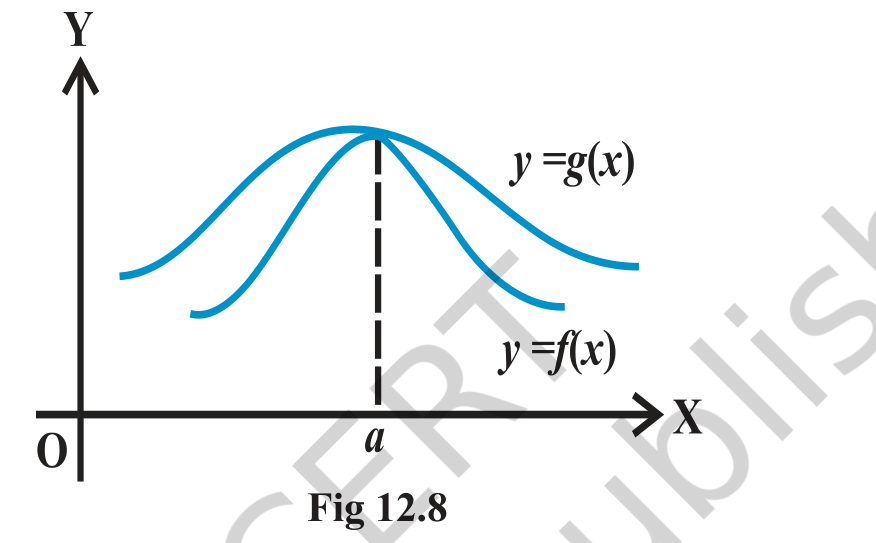
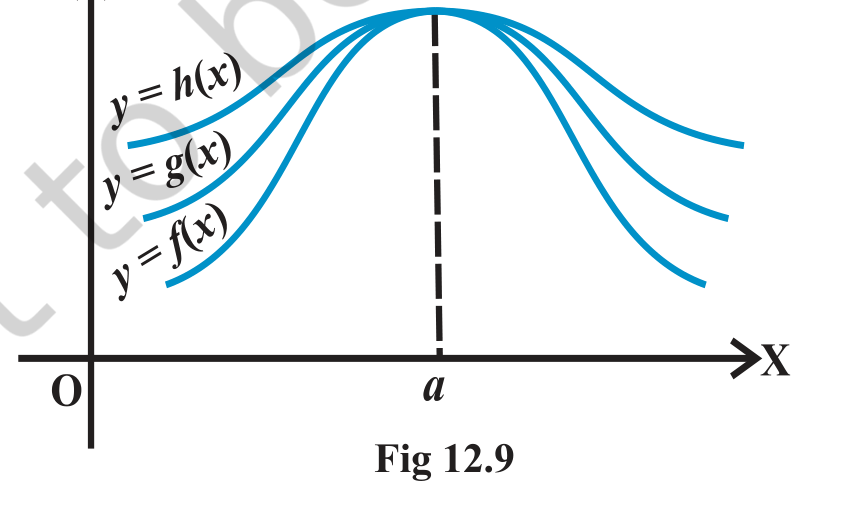
The sandwich or squeeze theorem says that if a function lies between two others for values near a point and both outer functions tend to the same limit, then the squeezed function also tends to that limit. It is the standard tool when a function oscillates and has no ordinary limit, such as sine of 1 by x, but is multiplied by something that shrinks.
For the limit of x times sine of 1 by x as x tends to zero, the sine factor lies between minus 1 and 1, so the whole expression lies between minus the absolute value of x and plus the absolute value of x. Both bounds tend to zero, so the limit is zero. This example appears in the objective questions of the exemplar and is a favourite of examiners.
The theorem also proves the basic trigonometric inequality used in the chapter. Comparing the areas of a triangle, a sector and a larger triangle inside the unit circle gives cosine x less than sine x by x less than 1 for small positive x, and squeezing as x tends to zero gives the limit 1. The geometric argument is worth reading once, because it explains where the standard limit comes from and why the radian measure matters.
4.3 Exercise 12.1 practice
Exercise 12.1 mixes algebraic and trigonometric limits. A typical item asks for the limit of (x cubed minus 27) by (x squared minus 9) as x tends to 3; factoring both gives (x minus 3) times a quadratic over (x minus 3) times (x plus 3), and the limit is 6 by 6, that is 1.
Another item asks for the limit of sine 4x by sine 2x as x tends to zero. Write each sine over its own angle: the expression becomes (sine 4x by 4x) times (2x by sine 2x) times 4 by 2, and the limit is 2. Matching angles is the whole method, and it is quicker than expanding near zero.
A third pattern combines a rational function with a trigonometric factor, for example the limit of (1 minus cosine x) by (x sine x) as x tends to zero. Multiply and divide by the right powers of x to create the standard limits, and the answer becomes 1 by 2. The exercise is designed so that every question reduces to the same three standard limits or to the sandwich theorem.
4.4 Answer patterns to recognise
When the variable tends to zero and the expression contains sine, tangent or one minus cosine, look for the standard limits before doing anything else. When the expression contains sine of a reciprocal, the sandwich theorem is the intended route. When the variable tends to a non-zero point, first shift the variable so that it tends to zero, because the standard limits are stated at zero.
A useful check on a trigonometric limit answer is its size. The limit of sine x by x is 1, slightly less than the function value near zero, and the limit of (1 minus cosine x) by x squared is 1 by 2, both moderate numbers. An answer far from the expected range suggests an angle-scaling error, which is easy to make and easy to catch by substituting a small value numerically.
Angle scaling is the only real technique in this section, and it is worth writing the scaling factor explicitly before computing. For sine of kx by sine of mx, the answer is k by m; for tangent of kx by x, it is k; for one minus cosine of kx by x squared, it is k squared by 2. These three shortcuts come from the standard limits and save time in an objective paper.
Exam
All trigonometric limits in this chapter assume radians. If a question uses degrees, convert to radians first or the factor pi by 180 will be missing from the answer.
Slideshow, slide 1 of 3. Use the left and right arrow keys to change slides and the space bar to play or pause.
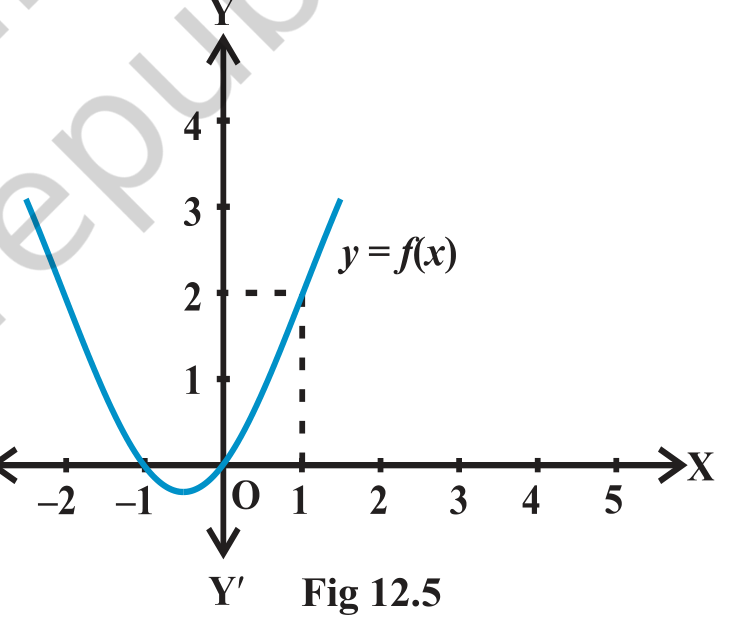
Graph of a quadratic function with a table of nearby values approaching the limit at x equal to 1