

Concepts: Microbes in household products
Microbes in Human Welfare16 min readLesson 1 of 6
1.1 Microbes are everywhere
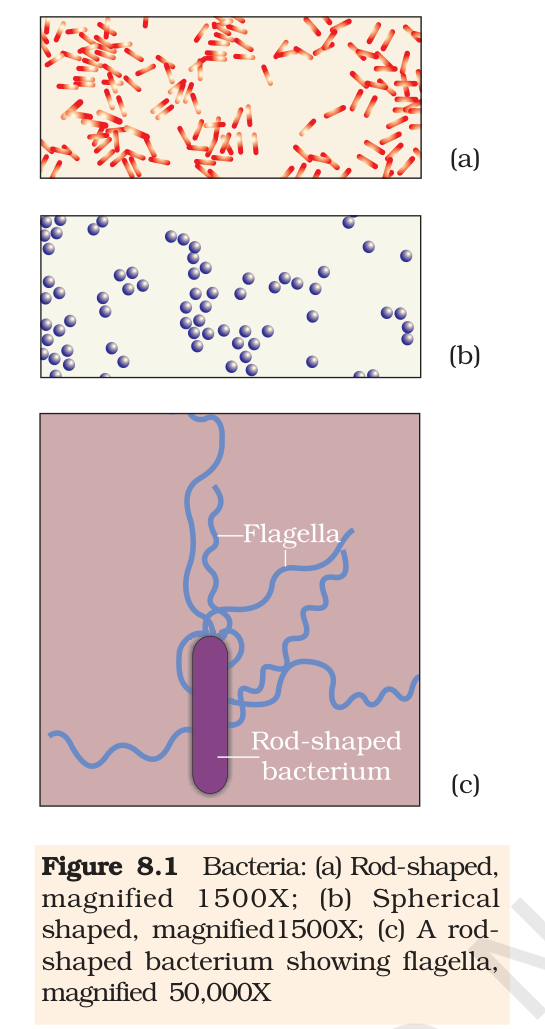
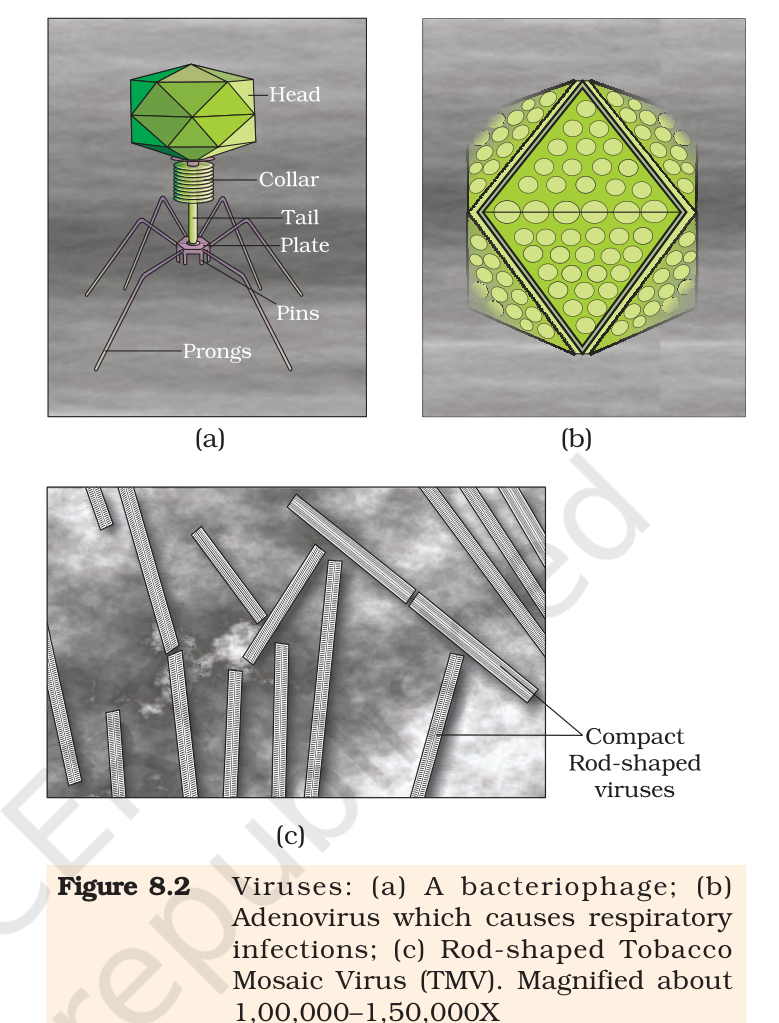
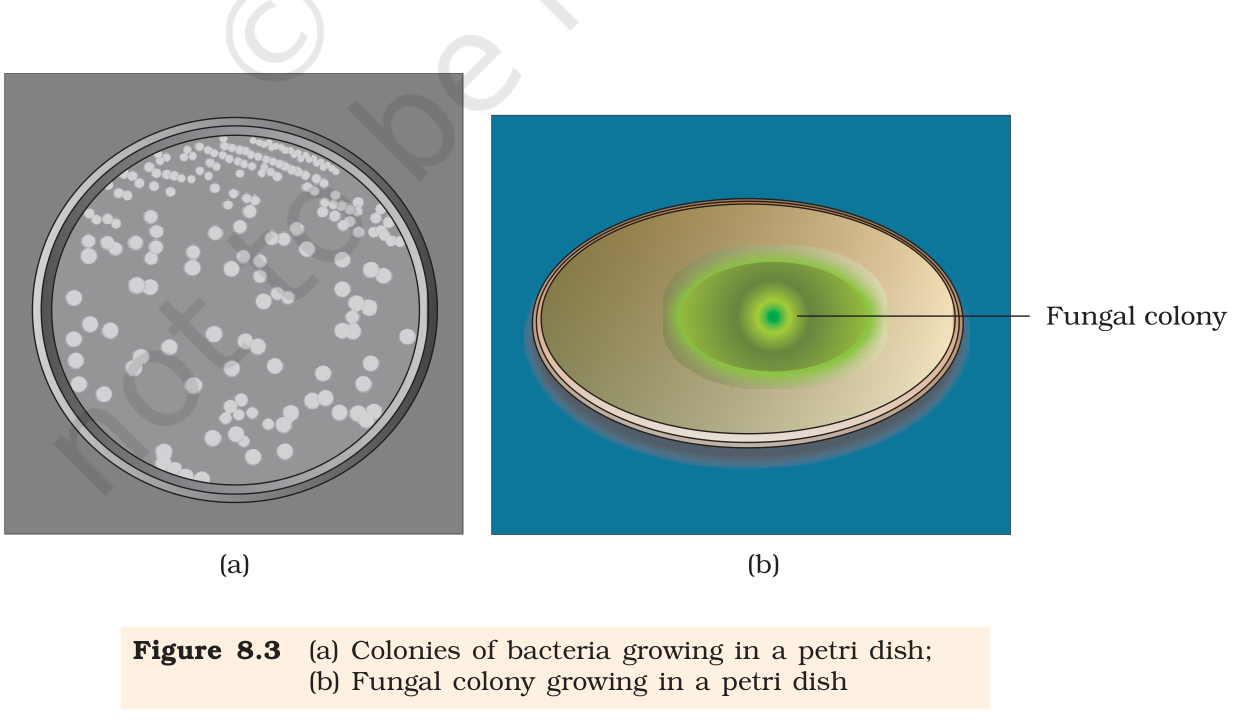
Beyond the plants and animals we can see, microbes form a large part of every ecosystem. The group includes protozoa, bacteria, fungi, and the microscopic viruses and viroids that infect animals and plants, plus prions, which are infectious proteins. They occur in soil, in water, in the air, and inside the bodies of animals and plants. Some live where little else survives: near the thermal vents of geysers where the temperature can reach about 100 degrees Celsius, deep in soil, below several metres of snow, and in strongly acidic surroundings. Not every microbe causes disease, and this chapter stays with the helpful roles. Bacteria and many fungi grow readily on a nutritive medium; left for a while they divide and build colonies large enough to see. Such cultures make it possible to study micro-organisms in the laboratory (Figure 8.3). The list of microbial groups is wider than bacteria and fungi. Protozoa, viruses, viroids and prions are also microbes. Size is the only common feature; their cell structure and way of life differ. A virus needs a host cell to multiply, while bacteria and fungi grow on their own if the medium supplies nutrients. This difference matters in the laboratory: bacteria and fungi can be cultured on nutritive media, while viruses have to be grown in living cells. In this chapter the useful roles mostly belong to bacteria and fungi, with a few from viruses and cyanobacteria.
1.2 Curd is a microbial product
When milk is left with a little curd, the milk turns into curd. The work is done by Lactobacillus and related organisms that are together called lactic acid bacteria, or LAB. These bacteria grow in milk and release acids. The acid coagulates the milk proteins and partially digests them, which is why curd has a softer texture than milk. Temperature matters in curd making. LAB multiply fastest in warm milk, so the pot is kept in a warm place and the curd sets in a few hours. In very hot weather the same bacteria over-acidify the milk and the curd turns sour, while refrigeration slows them down and stops the souring. A spoon of curd added to fresh milk acts as the inoculum, or starter, and carries millions of LAB. At a suitable temperature these bacteria multiply and turn the whole lot into curd. The change is about more than texture: curd is nutritionally better because the LAB raise its vitamin B12 content. The same bacteria also live in the human stomach, where they check the growth of disease-causing microbes.
1.3 Fermented foods of the Indian kitchen
The dough used for idli and dosa is fermented by bacteria. Carbon dioxide produced during fermentation makes the dough puff up. Bread dough is fermented with baker's yeast, Saccharomyces cerevisiae. In parts of southern India, palm sap is fermented to make toddy, a traditional drink. Fish, soyabean and bamboo shoots are also preserved this way in different regions. Cheese is one of the oldest foods made with the help of microbes. Varieties differ in texture, flavour and taste because different microbes are used. The large holes in Swiss cheese come from a large amount of carbon dioxide released by Propionibacterium sharmanii. Roquefort cheese is ripened by growing a specific fungus on the cheese, which gives it a particular flavour.
1.4 Keeping the ideas straight
| Product or food | Microbe | Role |
|---|---|---|
| Curd | Lactobacillus and other LAB | Acid coagulates and partly digests milk protein; adds vitamin B12 |
| Idli and dosa batter | Bacteria in the batter | Fermentation releases carbon dioxide and puffs the dough |
| Bread | Saccharomyces cerevisiae (baker's yeast) | Ferments the dough and releases carbon dioxide |
| Swiss cheese | Propionibacterium sharmanii | Carbon dioxide makes the large holes |
| Roquefort cheese | A specific fungus | Ripening gives the characteristic flavour |
The chapter lists a few fermented foods, but the pattern is wider. Fish, soyabean and bamboo shoots are fermented in different parts of the country, each product depending on the microbes naturally present or added as a starter. The common thread is that microbial enzymes break large food molecules into simpler ones, which changes texture, taste and keeping quality. Fermentation has therefore been used to preserve food long before refrigeration. A common mistake is to write that all bacteria are harmful. Another is to credit yeast with curd formation; curd is the work of lactic acid bacteria. In a board answer, name the microbe, say what it does, and then give the product. Three short sentences of this kind usually earn the full mark in a two-mark question. A second exam habit helps: give the microbe its full scientific name once, then the short form after that.
1.5 A note on the practical questions
Microbes are easiest to show, not to describe. When a question asks which sample you would carry to the laboratory, the answer earns marks for the reasoning, not the sample name. Curd or fermented batter is a good choice because one drop carries millions of living bacteria, and the same sample grows visible colonies on nutritive medium in a day or two. Soil carries more kinds of microbes, but the particles hide the cells and many soil organisms grow slowly, so the first demonstration is harder.
Exam
Questions on this section usually ask you to name the microbe and the product. Learn the pairs in the table above, and add one line on why the microbe is useful (acid production, gas production, ripening). For a five-mark answer, add the industrial or health benefit.