

Concepts: population stabilisation and birth control methods
Reproductive Health20 min readLesson 2 of 5
2.1 Population and the purpose of contraception
After independence the population grew quickly because death rates fell while birth rates stayed high. A large family size was once seen as security in old age and as help on the farm, but rapid growth puts pressure on food, housing, schools and hospitals. The official approach became the two child norm through family planning, and the health angle was added to it: contraception lets a couple choose the number and spacing of children, which protects the health of the mother and the child.
Contraception means preventing fertilisation or implantation. The methods in this section are grouped by how they work. They are also judged against a simple checklist: an ideal method should be user friendly, should not need much instruction, should be effective, should be reversible, and should have almost no side effects.
2.2 Natural methods
Natural methods do not use any device or medicine. Periodic abstinence, also called the rhythm method, depends on the fact that the ovum survives for about a day or two after ovulation and the sperm survive for about two to three days in the female tract. If couples avoid coitus during the middle of the cycle, when fertilisation is most likely, they lower the chance of conception. The method needs a regular cycle and careful counting, so it fails easily.
Withdrawal, or coitus interruptus, means the male withdraws before ejaculation so that semen does not reach the female tract. Lactational amenorrhea relies on the fact that a woman does not ovulate or menstruate during the first months of intense breastfeeding, when prolactin levels are high. It works only when breastfeeding is exclusive and frequent and the baby is under six months old. The calendar, temperature and mucus based methods are variations of the same idea, and every one of them requires good understanding to be reliable.
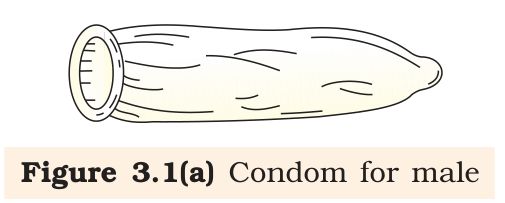
2.3 Barrier methods
Barrier methods stop the sperm from meeting the ovum by placing a physical barrier. The male condom is a thin rubber or latex sheath that covers the penis and collects the semen. The female condom is a similar sheath placed inside the vagina. Diaphragms, cervical caps and vaults are rubber cups that cover the cervix in the female. These methods are simple and safe, and the condom has an extra advantage: it reduces the chance of sexually transmitted infections, including HIV.
A note of caution goes with the barrier methods. They must be used correctly, every time, and a torn condom ruins the protection. Spermicidal creams, jellies and foams can be used along with a barrier to increase the effect, and lubricated condoms are also available.
2.4 Intra uterine devices
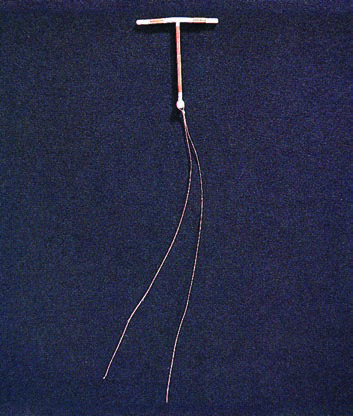
Intra uterine devices, or IUDs, are small objects placed in the uterus by a doctor. Older devices such as the Lippes loop were non medicated. Copper releasing devices include CuT, Cu7 and Multiload 375; these are the devices most often asked about in the paper. Hormone releasing devices such as Progestasert and LNG 20 deliver a hormone and last for years.
The mode of action decides the answer for an IUD question. The device causes a foreign body reaction that increases the phagocytosis of sperm inside the uterus. Copper ions released by the copper devices suppress sperm motility and reduce the fertilising capacity of the sperm. Hormone releasing devices thicken the cervical mucus and make the uterus unsuitable for implantation. Because a doctor inserts the device, safety and follow up matter, and the device is removable if the woman wants to conceive.
2.5 Pills, implants and injections
Oral contraceptive pills contain either only a progestogen or a combination of progestogen and estrogen. They work mainly by stopping ovulation. They also change the cervical mucus so that sperm cannot move easily and make the endometrium less suitable for implantation. The combination pill is taken daily for 21 days and then stopped for seven days, during which menstruation occurs. It is started within the first five days of the menstrual cycle. The pills are not free of side effects and are sold only on prescription.
Saheli is different from the usual pill. It is a non steroidal preparation developed at the Central Drug Research Institute in Lucknow, and it is taken once a week. Because of its low dose and few side effects it became an important option for Indian women.
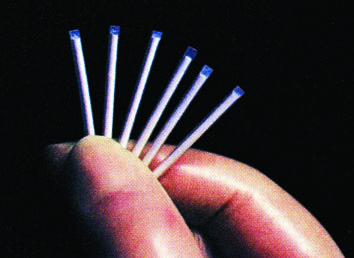
Injections and implants use the same hormones with a longer action. Progestogens or progestogen and estrogen combinations can be injected, and they protect for about three months. Progestogen implants last even longer. A separate emergency method adds combined pills or IUDs within 72 hours of unprotected sex, and the sooner the better.
2.6 Surgical methods
The male operation is vasectomy; the surgeon cuts or ties a short piece of the vas deferens, and the ejaculate then carries no sperm. The female operation is tubectomy; a short section of the fallopian tube is removed and tied, so no ovum reaches the uterus. Both are close to permanent and hard to reverse, so they are chosen only after the family is complete.
Warning
Do not mix up the mode of action of the copper IUD and the hormone releasing IUD. Copper acts on sperm and on phagocytosis, while hormones thicken the cervical mucus and change the endometrium. A table of four groups (natural, barrier, IUD, surgical) is the safest way to revise.