

Pathogens and the diseases they cause
Human Health and Disease24 min readLesson 1 of 5
1.1 Health and disease
Health is more than simply not being ill. The World Health Organization describes it as complete physical, mental and social well-being, and it needs a balanced diet, personal hygiene, exercise, clean surroundings and enough rest. When the normal functioning of the body or of a part of it is disturbed, the body is said to be diseased. A disease may be infectious, caused by a pathogen that passes from one person to another, or non-infectious, caused by a defect in the body itself or by a deficiency in the diet.
The organisms that cause disease are called pathogens. They include bacteria, viruses, protozoans, helminths and fungi, and each group has its own way of entering the body and causing damage. Some pathogens grow in the cells they invade and destroy them, some release toxins, and some simply take the nutrients that the host needs. Recognising the pathogen and knowing how it spreads is the first step in preventing the disease, and most of the public health measures in this chapter follow from that knowledge.
1.2 Typhoid
Typhoid is caused by the bacterium Salmonella typhi, which enters the body through food or water contaminated with the faeces of an infected person. The bacterium multiplies in the intestine, invades the wall of the small intestine, and then travels through the blood to other organs. The patient runs a high fever that climbs in steps, and also feels weak, with stomach pain, constipation, headache and little appetite.
The infection is diagnosed with the Widal test, which detects antibodies that the body has made against the bacterium. Mary Mallon, known as Typhoid Mary, was a cook who carried the bacterium without showing symptoms and infected many people she cooked for, which is a reminder that a carrier can spread a disease even when they look healthy. Vaccination and safe drinking water are the main protection.
1.3 Pneumonia and the common cold
Pneumonia is caused by bacteria such as Streptococcus pneumoniae and Haemophilus influenzae, and also by viruses. The infection reaches the alveoli, the tiny air sacs of the lungs, which become filled with fluid, so the exchange of gases is affected. The symptoms are fever, chills, cough, headache and a difficulty in breathing, and in severe cases the lips may look bluish because the blood is short of oxygen. The infection spreads through droplets released by an infected person when they cough or sneeze, and it can also come from contaminated objects.
The common cold is caused by rhinoviruses, which infect the nose and the upper part of the respiratory tract. The symptoms are a blocked nose, sneezing, a sore throat and a mild fever for a few days.
1.4 Malaria
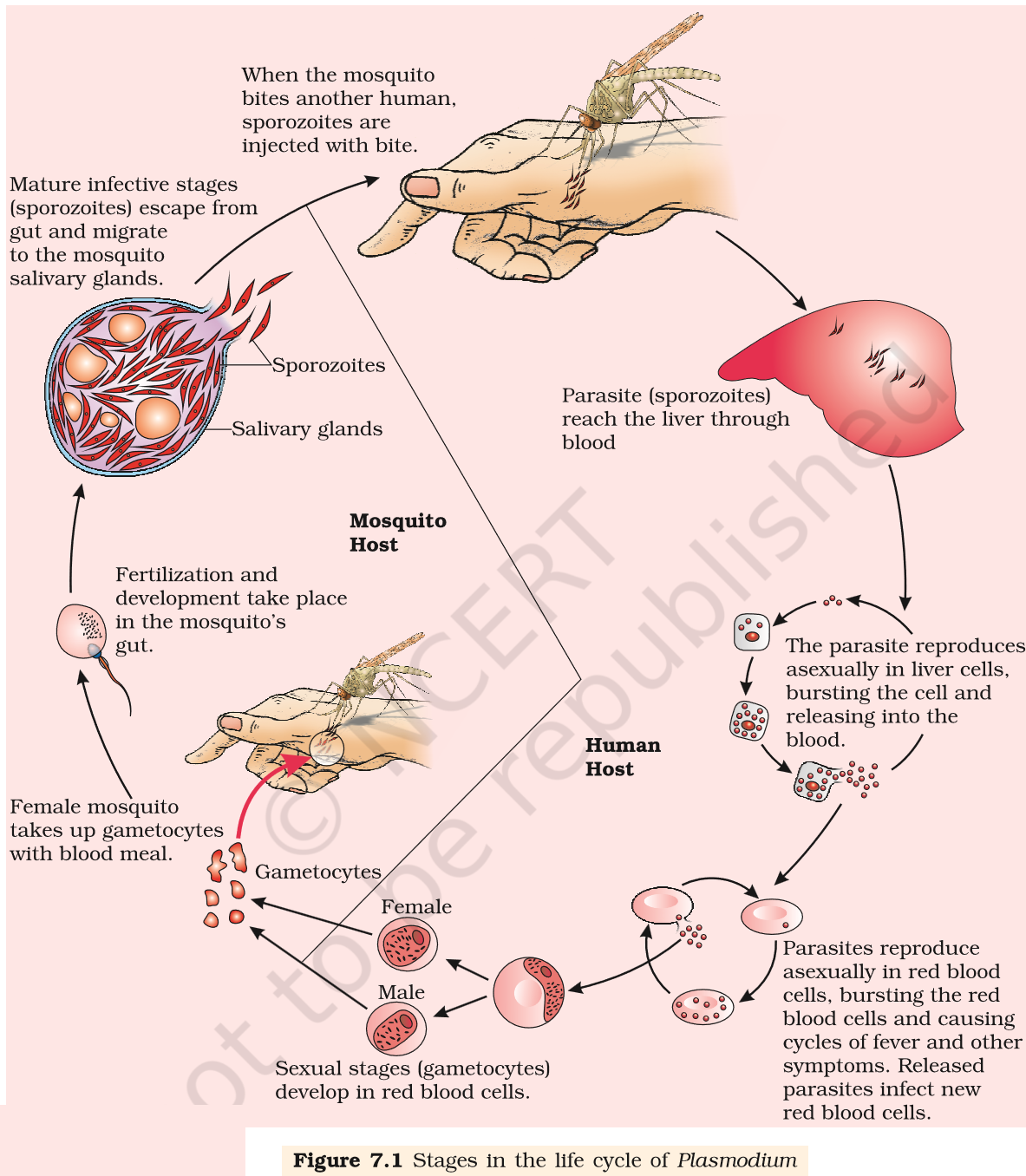
Malaria is caused by a protozoan of the genus Plasmodium, and the species that infect humans are Plasmodium vivax, Plasmodium falciparum and Plasmodium malariae. The female Anopheles mosquito is the vector, and it picks up the parasite when it bites an infected person. Inside the mosquito, the parasite completes the sexual part of its life cycle, and the infective stage, the sporozoite, is passed on when the mosquito bites a healthy person. The sporozoites reach the liver and multiply there, then pass into the red blood cells and multiply again, bursting the cells and releasing the pigment haemozoin.
The symptoms of malaria are a chill followed by a high fever that returns every two or three days for vivax and falciparum, and the haemozoin released by the bursting red blood cells is responsible for the chill and the fever. The life cycle in Figure 7.1 is the part that the exam expects: sporozoites in the human host, the asexual cycle in the liver and the red blood cells, the gametocytes that a mosquito picks up, and the sexual cycle in the mosquito.
1.5 Amoebiasis, ascariasis and filariasis
Amoebiasis, also called amoebic dysentery, is caused by the protozoan Entamoeba histolytica, which lives in the large intestine. The symptoms are abdominal pain, constipation alternating with diarrhoea, and blood mixed with mucus in the stools. The cysts of the parasite are passed in the faeces, and they can contaminate water and food, so the disease is spread by unsafe drinking water and by poor sanitation.
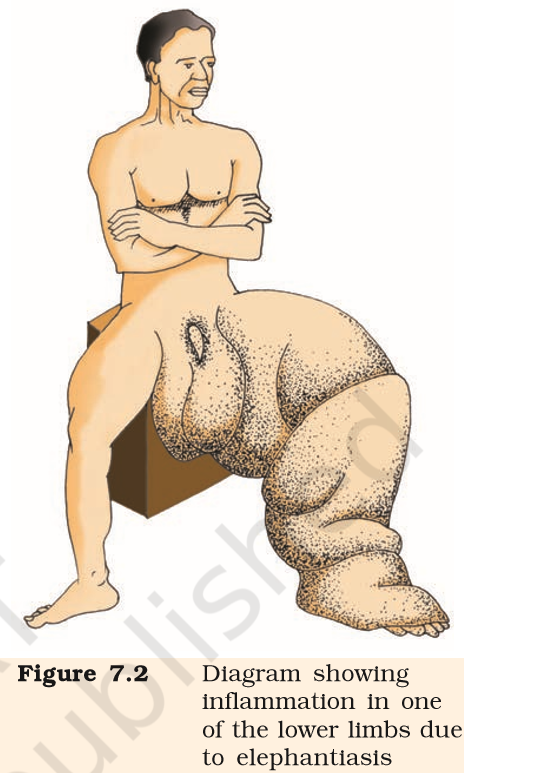
Ascariasis is caused by Ascaris, the common roundworm. It lives in the intestine, and the patient may show internal bleeding, aching muscles, fever and anaemia, while the intestine can even get blocked. The eggs of the worm are passed in the faeces and reach the soil, and from there they can get into a person through contaminated vegetables and fruits. Filariasis is caused by the worms Wuchereria bancrofti and Wuchereria malayi, which live in the lymphatic vessels of the lower limbs for years and cause a slowly developing chronic inflammation, so that the limb swells greatly. This condition is called elephantiasis, and the genital organs are also affected. This pathogen is passed on by the bite of the female mosquito vector, as the photograph in Figure 7.2 shows.
1.6 Ringworm and prevention
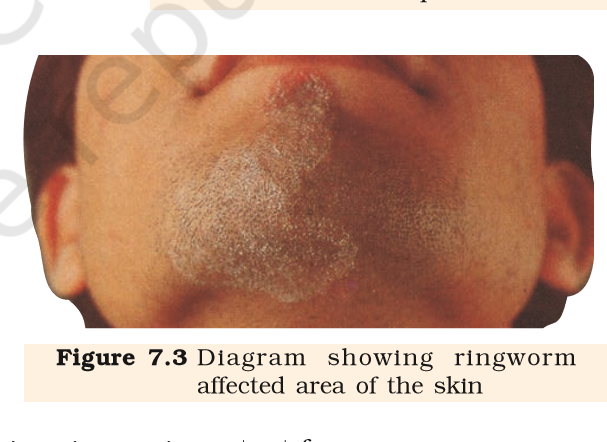
Despite the name, no worm is involved: ringworm is a fungal infection caused by species of the genera Microsporum, Trichophyton and Epidermophyton, and it is among the commonest infections of humans. The fungi grow on the skin, in the nails and on the scalp, and they cause dry, scaly lesions with an intense itching, as shown in Figure 7.3. Heat and moisture help the fungi to grow, so they thrive in the folds of the skin such as the groin and between the toes. The infection is acquired from the soil or by sharing towels, clothes and even combs with an infected person.
The chapter ends the disease section with the general principles of prevention and control. Public health measures include keeping the body clean, drinking safe water, and making sure that food and vegetables are washed properly. Public hygiene includes the proper disposal of waste and excreta, the periodic cleaning and disinfection of water reservoirs and tanks, and standard hygiene in public catering. They matter most for infections that travel through food and drink, typhoid, amoebiasis and ascariasis among them. For the air-borne diseases such as pneumonia and the common cold, the measures also include avoiding close contact with an infected person and covering the mouth while coughing or sneezing. Vaccination protects against several of these diseases and is discussed with immunity in the next section.
- Can I name the pathogen and the mode of transmission for each of the eight diseases in this section?
- Can I describe the symptoms of malaria, elephantiasis and ringworm in one line each?
- Can I list the public health measures that prevent water-borne and air-borne diseases?