

A year of investigations ahead
Exploring the Investigative World of Science13 min readLesson 2 of 5
2.1 From a drop of water to the whole planet
This book travels from things too small to see to problems too large to ignore. Along the way, each chapter is a stop where a different part of the world invites a question. Seeing the stops in advance helps you notice how the same investigative habits connect them.
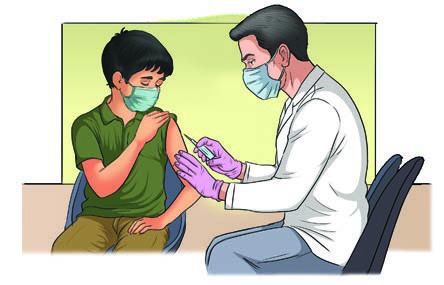
The journey begins with a drop of water and the microbes living in it. Some are invisible helpers that aid digestion or help make medicines; others cause infections. Next comes health, where food, exercise, medicines and vaccines decide how well the body resists disease.
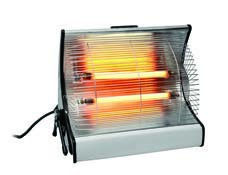
From the body the book moves to electric current. Its heating effect keeps us warm, and its magnetic effect runs motors and machines. Since both effects depend on forces, the next stop studies force itself: pushes and pulls that speed objects up, slow them down or change their direction. Understanding force explains why a ball tossed into the air falls back and why applying the brakes brings a car to a halt.
2.2 Pressure, particles and mixtures
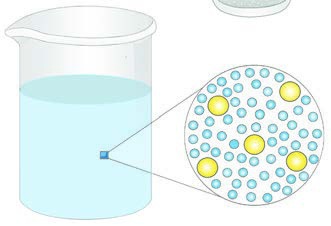
Force spread over an area gives pressure, and pressure differences set air moving. A gentle breeze and a fierce cyclone can both begin with a difference in pressure. Explaining air pressure and the boiling point of water means zooming down to particles, the tiny units that everything is made of. The book then groups materials into elements, compounds and mixtures, and shows how particles behave in solutions such as sugar in tea.
2.3 Light, calendars and life
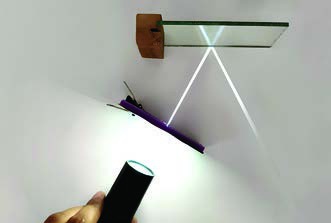
The next stop is light, which reflects from mirrors and bends when it passes through lenses. Reflection explains the image in a shiny spoon, and refraction explains corrective glasses. Rough surfaces reflect light too, including the Moon, so the relative positions of the Sun, Moon and Earth create the phases we see. Careful records of those phases, together with sunrises and sunsets, helped humans build the first calendars.
After calendars, the book turns to relationships in nature, where every living thing depends on air, water, sunlight and other organisms. The final chapter asks why Earth is just right for life: it lies at the right distance from the Sun for liquid water, and its atmosphere supplies oxygen while shielding us from harmful ultraviolet rays. Human activity can disturb that balance, which is why the book ends with a question about what science can do to protect it.
2.4 How the stops connect
The chapters are not separate boxes. Forces lead to pressure, pressure differences move air, and the movement of air produces wind, storms and cyclones. Particles explain why a gas can push on the walls of a container, why a solid keeps its shape, and why sugar dissolves in tea. Light gives us mirrors, lenses, the phases of the Moon and, through long observation, the first calendars. Living things and their surroundings form ecosystems, and the final chapter gathers all of this to ask why Earth supports life and how human choices affect it.
2.5 Two habits for the year
The first habit is looking closely before explaining. The second is measuring whenever a number is possible. A physicist might time a swing, a chemist might weigh a pinch of salt, a biologist might count the leaves on a shoot. The instrument changes, but the aim is the same: turn an impression into a record that someone else can check.
2.6 Questions to carry into every chapter
Four questions work almost anywhere. What is this thing made of? How does it move or change? What evidence would show that my explanation is wrong? How does it connect to other things, including living things? Carrying these questions into each chapter turns reading into a conversation with the text.
2.7 What to look for in each chapter
Each chapter is built around investigations. Some begin with a question, some with a surprising observation, and some with a familiar object such as a torch, a candle or a handful of soil. The pictures are not decoration; they show evidence and apparatus. Look at them closely, read the captions, and ask how each picture relates to the paragraph beside it.
2.8 Reading a chapter as an investigator
Before reading a chapter, look at its title and pictures and write two questions you hope to answer. While reading, mark the places where evidence is used. After reading, try to answer your questions in one or two sentences without looking back. This small habit turns reading into an investigation of its own.
| Chapter | Investigation it invites |
|---|---|
| The Invisible Living World | What lives in a drop of water, and which microbes help or harm us? |
| Health: The Ultimate Treasure | How do food, exercise, medicines and vaccines protect the body? |
| Electricity: Magnetic and Heating Effects | How does current produce heat and magnetism? |
| Exploring Forces | Why do objects gather speed, lose speed or turn? |
| Pressure, Winds, Storms, and Cyclones | How do pressure differences move air and build storms? |
| Particulate Nature of Matter | What are things made of, and how do those particles move? |
| Nature of Matter: Elements, Compounds, and Mixtures | How can materials be classified? |
| Solutes, Solvents, and Solutions | How does a solid dissolve in a liquid? |
| Light: Mirrors and Lenses | How does light reflect and bend? |
| Keeping Time with the Skies | How did the Moon's cycle help people make calendars? |
| How Nature Works in Harmony | How are living things and their environment connected? |
| Our Home: Earth | What makes Earth suitable for life, and how is it changing? |