

Health is more than not being ill
Health: The Ultimate Treasure13 min readLesson 1 of 5
1.1 A notice board full of health news
The chapter opens with a bulletin board covered in news clippings. One clipping reports that heavy social media use is raising loneliness. Another gives the number of people in India living with diabetes. Others warn about fast food, air pollution, screen time and dry eyes, obesity, or the rise of malaria and dengue with the monsoon. A few clippings are hopeful: regular handwashing cuts infections, yoga reduces anxiety, and safe drinking water prevents disease.
Read together, the clippings say something important. Health is not shaped by hospitals alone. It is shaped by what we eat, how much we move, how well we sleep, the air we breathe, the water we drink, and the people we live with. Health covers physical comfort, a positive outlook and close relationships, and the absence of disease alone does not make a person healthy.

1.2 Three sides of health
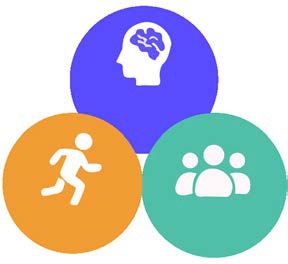
Health, says the World Health Organization, means complete well-being in body, mind and social life; absence of illness alone does not qualify. The idea is easier to remember as three sides of one picture.
| Side of health | What it includes |
|---|---|
| Physical | The body works well, has energy, and can move, play and work without strain |
| Mental | Thoughts and emotions are in reasonable balance, and stress can be handled |
| Social | Relationships with family, friends and the community are healthy |
A healthy person can generally perform tasks more efficiently and cope with difficult situations. Such a person can also adjust well with peers and other members of society. The three sides support one another. A person who is physically fit but lonely is not fully healthy, and a person who is cheerful but constantly unwell is not fully healthy either.
1.3 When loneliness becomes a health problem
The chapter's first activity tells the story of a Grade 8 student who shifted to a new school in a different city. He had no friends in the new place, and his parents were busy. He was lonely. He turned to his phone and social media for company, but the habit left him feeling worse. He gave up on making friends, developed headaches, shed weight and slept badly. A doctor suggested cutting screen time and seeing a counsellor. The school counsellor arranged help so that he could make friends and improve his health. The story shows how habits, surroundings and emotions work together. The cause of his health problems was not a germ. It was a mix of loneliness, too much screen time and a lack of support.
1.4 Reading health news carefully
The clippings on the board are of two kinds. Some describe personal habits, such as eating fast food daily, spending hours on screens, or skipping exercise. Others describe conditions that a single person cannot fix alone, such as air pollution or the spread of malaria with the monsoon. Both kinds affect health, and both call for action, but the action is different. A personal habit can be changed by making a choice, while a polluted neighbourhood needs community effort, cleaner fuel, better drainage and public awareness.
Health news also shows why numbers matter. A statement such as "regular handwashing reduces infection" becomes more useful when the size of the reduction is known. A graph of disease cases over months can show when a risk rises, which helps a community prepare before the season arrives. Reading a health headline with two questions, what exactly is claimed and how strong is the evidence, turns a news item into a small lesson in investigation.
1.5 An older Indian view of balance
Ayurveda, an old system of Indian medicine, sees true health as balance among body, mind and surroundings. A daily routine (dinacharya) and a seasonal routine (ritucharya) help keep that balance. Fresh, wholesome food suited to a person's prakriti, or body constitution, is considered essential. Exercise, cleanliness, sound sleep and a calm mind all support well-being, and yoga, meditation and mindfulness are ways to work towards it.
The idea is old, but it matches the modern definition closely. Both say that health is a balance rather than a single test result. Health and happiness are closely related too. Feeling happy helps a person stay active and healthy, and good health improves mood.
1.6 A simple health check
The three-sided definition can be turned into a short personal check. Do I get enough sleep? Do I eat fruit and vegetables most days? Do I move my body daily? How long do I spend on screens, and how does it leave me feeling? Is there someone I can talk to when I am upset? No single answer decides whether a person is healthy, but the pattern is useful. A low score in one area shows where a small change might help most.
The check also shows why health cannot be measured with one number. A fit person who is lonely may still struggle, and a person with no obvious illness may be exhausted from lack of sleep. Taking all three sides into account gives a fairer picture.
1.7 Why the definition matters
The definition changes what a school or a family should pay attention to. If health were only the absence of disease, a school would need only a first-aid box. Because health includes mental and social well-being, a school also needs counsellors, safe spaces to talk, time for play and chances for students to build friendships.
It also changes how a person responds to a friend who is struggling. Instead of saying "you are not sick, so nothing is wrong", a classmate can ask what is troubling them. The boy in the activity suffered from loneliness and screen habits long before any disease appeared. Recognising that early is part of staying healthy.