

Staying healthy: lifestyle and surroundings
Health: The Ultimate Treasure14 min readLesson 2 of 5
2.1 Good habits and bad habits
The chapter asks students to list the habits that parents, teachers and elders encourage. A few appear again and again: keep yourself clean, eat a balanced diet, exercise regularly, and make time to relax or meditate. The same activity asks for habits that harm health. Common answers include spending too long on screens, eating fast food every day, sleeping very late or too little, and skipping meals, especially breakfast.
Taking care of the body and the mind is a daily project. Health depends on two broad things: lifestyle, which is how we live, and environment, which is the world around us. Neither can be ignored.
2.2 A healthy lifestyle
A healthy lifestyle has several parts, and each one is practical.
- Fill meals with fruits, vegetables and whole grains. Keep processed, fatty and sugary items off the daily menu, and do not make junk food a habit.
- Keep moving through outdoor play, walks, runs, cycling or exercise. Regular activity helps the heart, muscles and bones, and it also lifts mood.
- Cut screen hours and make room for nature. Long hours on screens can disturb sleep and eyesight and take time away from friends and movement.
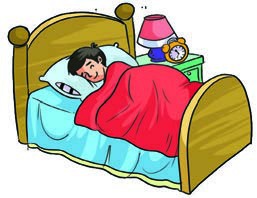
- Get enough sleep so that the body and mind can rest and recover. A regular bedtime helps more than a late one on holidays.
- Practise yoga or simple breathing exercises such as pranayama. These help calm the mind and improve concentration.
- Say no to harmful substances such as tobacco, alcohol and addictive drugs. These damage health and can become very hard to give up.
Some of these habits protect directly against disease. A balanced diet and regular exercise reduce the risk of obesity and diabetes, and avoiding tobacco protects the lungs and heart. Others support health indirectly by improving sleep, mood and concentration. Together, they add up to a lifestyle that helps the body resist illness.
2.3 A clean environment
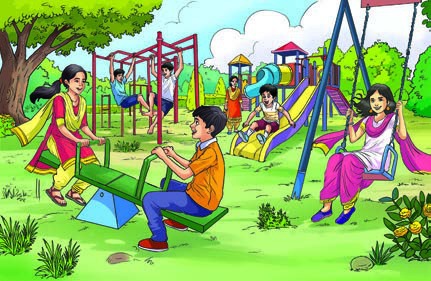
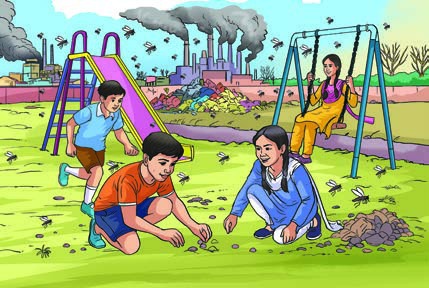
The chapter asks students to compare two playgrounds. One is clean, well maintained and pleasant. The other is polluted and dirty, with flies and mosquitoes around. Most people would choose the first, and for good reasons. People living near the second playground fall sick more often.
Clean air and clean water are basic health needs. City air, polluted by vehicles and factories, can cause coughing, breathing trouble and asthma. The Air Quality Index, or AQI, tells us how clean the air is on a given day. Drinking safe water and using clean toilets reduce water-borne and insect-borne diseases. A community sanitation campaign in Bhadrak district, Odisha, helped more people build and use toilets, reduced open defecation, and raised child health, with fewer diarrhoea and infection cases.
Handwashing is a small habit with a large effect. Washing hands with soap and water removes pathogens, and regular handwashing is reported to cut infections substantially. Keeping the home, food and water clean works alongside personal hygiene.
2.4 Small choices add up
Healthy routines are built from small choices. Eating breakfast instead of skipping it gives the body energy for the school day. Walking or cycling a short distance instead of taking a vehicle adds activity without needing extra time. Keeping the phone away for an hour before bed helps sleep, and carrying a water bottle makes plain water easier to choose than a sugary drink.
None of these choices feels dramatic on its own. Together they decide how much exercise, sleep and junk food a person gets in a week, and those totals shape the risk of lifestyle diseases later. A school health club can support the same choices by organising walking groups, clean-up drives and posters about handwashing and balanced meals.
2.5 Mind, relationships and health
Even with good food and a clean place, a person may not feel well if they feel lonely or upset. Time with family and friends, conversation, laughter and shared fun help keep the mind healthy. The story of the lonely student shows that social well-being is not a luxury; it is part of health. A school, a family and a friend can all support a person in ways that no medicine can replace.
2.6 Sleep, screens and mood
Sleep is when the body repairs itself and the mind sorts out the day. A regular bedtime, a dark and quiet room, and a break from screens before bed all help. Too little sleep shows up as tiredness, poor concentration and a short temper, and over months it adds to stress. Screens are not the enemy, but long hours of scrolling at night take the place of sleep and movement.
Mood is part of the same system. Exercise lifts mood, sleep improves it, and time outdoors calms the mind. A person who feels low for weeks, loses interest in things, or cannot sleep should talk to a trusted adult; that is a health need, not a weakness.
2.7 Clean habits at school and home
A few habits stop pathogens before they enter the body. Wash hands with soap before eating and after using the toilet. Carry a clean water bottle and avoid drinking from shared cups. Cover cooked food, and keep the kitchen and classroom clean. Empty water from coolers, pots and tyres around the home so that mosquitoes do not breed in standing water.
These habits are simple, but they work best when everyone follows them. A classroom where one student covers a cough, another cleans a shared table and everyone washes hands is a classroom that protects all its members.