

Prevention, vaccines and treatment and quick revision
Health: The Ultimate Treasure17 min readLesson 4 of 5
4.1 Immunity and how vaccines work
Prevention is better than cure, and the body has its own first line of defence. The natural ability of the body to fight diseases is called immunity, and it works through a special system called the immune system. Some people fall sick more often than others even in a similar environment, because their immunity and general health differ.
Vaccines help the immune system prepare in advance. A vaccine trains the immune system to recognise and attack a harmful germ, so that the body is ready if the real germ arrives. The protection that follows contact with a pathogen or a vaccine is called acquired immunity. Vaccines come in several forms. Some use weakened or killed pathogens, some use harmless pieces of a germ, and newer ones direct body cells to make a harmless piece that the immune system learns to recognise.
Children receive drops or injections that protect them from illnesses including polio, measles, tetanus and hepatitis. A tetanus shot given after an injury, for example, contains an inactivated bacterial toxin. It lets the immune system build protection without bringing on the illness.
4.2 Smallpox and the first vaccine
Smallpox blistered its victims and killed millions. Cowpox, a milder illness of cows, could also pass to people. In the late 1700s the English doctor Edward Jenner observed that people who had caught cowpox seemed protected from smallpox. He tested the idea by using material from cowpox sores, and the result was the first vaccine.
The method worked, and mass vaccination finally drove smallpox out of the world. In 1965 a major vaccination campaign began, and by 1979 smallpox was declared eradicated. The chapter's graph traces the number of countries reporting smallpox cases from 1950 to 1980, and the line falls sharply as vaccination spreads.
India had a traditional method of protection long before modern vaccines. Variolation used material from a smallpox sore, scratched into the skin to cause a mild infection and build immunity. The people who performed this practice were called teekedaars. It was a risky method compared with vaccination, but it shows an old understanding that a mild exposure could train the body's defence.
4.3 Vaccines today and India's role
Vaccines are preventive, not curative. They reduce the chance of serious illness before it happens but do not treat a person who is already sick. Scientists and doctors test vaccines carefully for safety, and getting vaccinated protects both the person and the people around them.
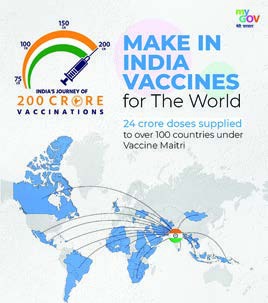
India ranks among the biggest vaccine makers in the world. Indian companies make vaccines on a large scale and supply them to many countries, and they played an important role during the COVID-19 pandemic. The "Make in India, vaccines for the world" campaign highlights this role. Indian scientist Maharaj Kishan Bhan helped develop the Rotavirus vaccine, which protects children from a serious cause of diarrhoea.

4.4 Antibiotics and antibiotic resistance
If the immune system fails against a bacterial infection, a doctor may prescribe antibiotics. Antibiotics destroy bacteria and act only on bacterial infections, since they attack cell parts found in bacteria but not in human or animal cells. They have no effect on viruses or on protozoal disease.
Penicillin, the first antibiotic, was discovered in 1928 by Alexander Fleming. Working with harmful bacteria, he spotted a mould on a thrown-away petri dish: the bacteria near it had stopped growing. The mould was giving out a substance lethal to the bacteria, and that chance observation led to a medicine that has saved millions of lives.
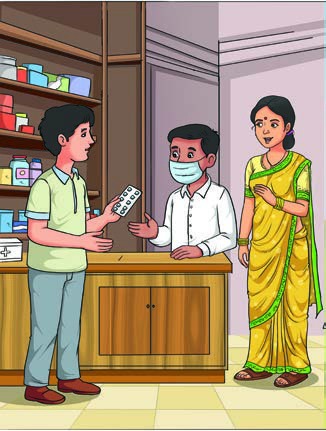
Antibiotics are powerful, but their careless use has a cost. When they are taken for the wrong illness or in incomplete doses, bacteria that survive can multiply, and the medicine stops working against them. This is antibiotic resistance. Resistant bacteria can spread from person to person in hospitals and the community, and also through animals, food and crops. To slow resistance, use antibiotics only when a doctor prescribes them, in the correct dose and for the full duration. Never share or save leftover antibiotics.
Traditional systems of medicine such as Ayurveda, Siddha and Unani use herbs, oils and minerals, along with lifestyle and diet, to manage some health problems. They can be useful for everyday well-being, but they may not be effective for every disease or at every stage. For non-communicable diseases, treatment usually aims to ease symptoms and improve quality of life with medicines, lifestyle change and rehabilitation, supported by early diagnosis and continuous care.
4.5 Common mistakes to avoid
- Treating health as simply not being sick: mental and social well-being are part of it.
- Thinking all diseases spread from person to person: non-communicable diseases do not.
- Believing antibiotics cure every infection: they act on bacteria, not viruses or protozoa.
- Saying a vaccine cures a disease: vaccines are preventive, not curative.
- Taking antibiotics without a prescription or stopping early: this feeds antibiotic resistance.
- Confusing a symptom with a sign: a symptom is felt, a sign is seen or measured.
- Classifying deficiency diseases as communicable: they are non-communicable.
Exam
For the WHO definition, list three parts, physical well-being, mental well-being and social well-being, and add that absence of illness alone is not enough. For diseases, separate cause from spread: pathogens cause communicable diseases, while lifestyle, diet and environment cause most non-communicable diseases. For vaccines, remember that they train the immune system and give acquired immunity, and that they prevent rather than cure.
- State the WHO definition of health and name its three aspects.
- List four lifestyle habits that protect health and three that harm it.
- Explain how a clean environment and clean water protect health.
- Differentiate symptoms and signs with one example each.
- Differentiate communicable and non-communicable diseases with examples.
- Explain how vaccines work and what acquired immunity means.
- Explain why antibiotics should be used only when prescribed.