

Habitats: living and non-living together
How Nature Works in Harmony15 min readLesson 1 of 5
1.1 When elephants leave the forest
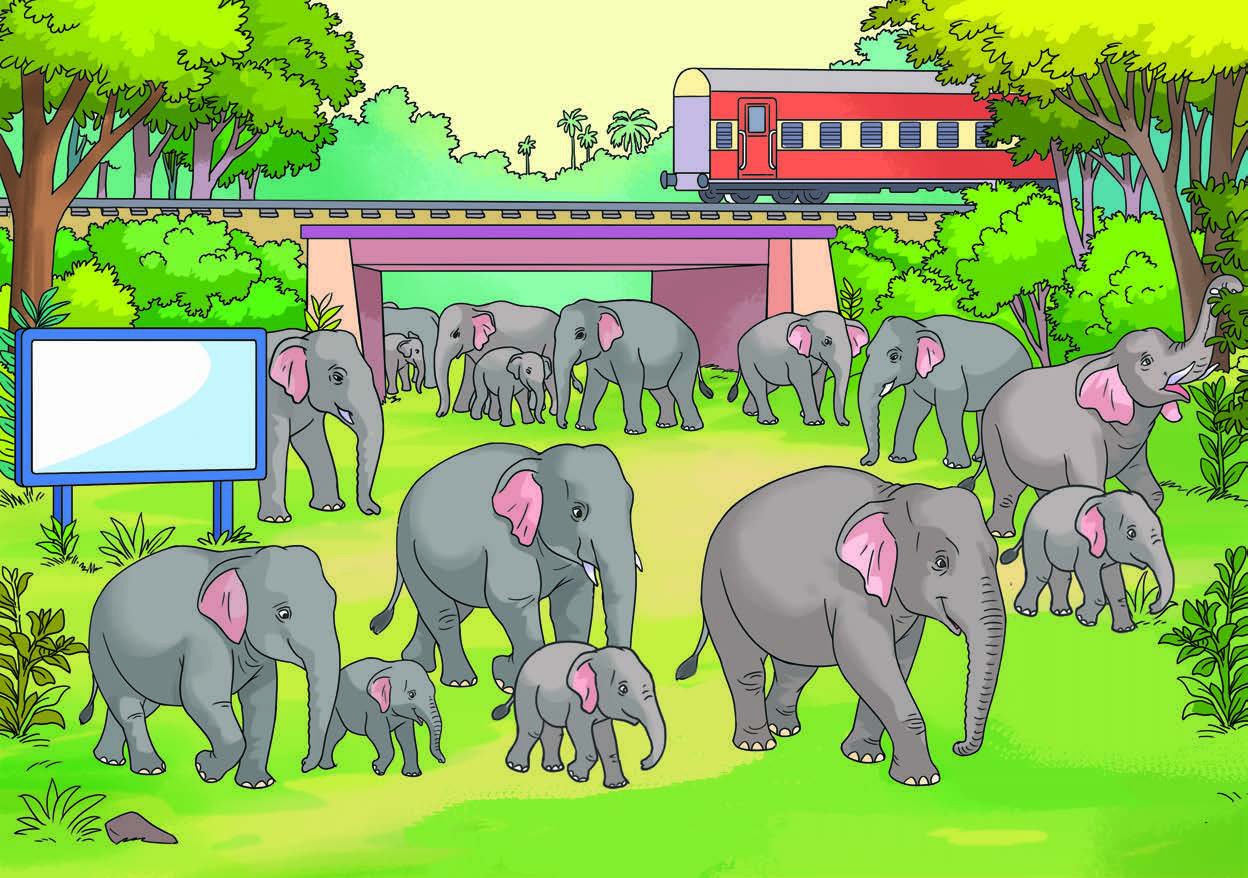
Across states such as Assam, Odisha, Jharkhand, Chhattisgarh and West Bengal, elephants sometimes walk into farms and villages. When their forest home runs short of vegetation and waterholes dry up, they search for food such as bananas and sugarcane. Crops get damaged, and people or domestic animals can be harmed.
Rainfall and temperature changes affect plant growth, and felling trees for roads and buildings shrinks forests further. As habitat shrinks, animals move towards human areas. Ecologists mark corridors that link forest patches so that elephants can move between forest areas without clashing with villages. The sequence shows how tightly the parts of nature are linked.
1.2 A habitat is a home
A habitat is the place where an organism lives, and it can be as small as the bark of a tree. Different habitats hold different plants and animals that adapt to local conditions. Compare a pond and a forest: both contain living things and non-living things, but the types differ.
The living members, such as plants, animals and microbes, are the biotic components. The non-living parts, such as air, water, soil, sunlight and temperature, are the abiotic components. A pond fish gets food from small plants and animals and oxygen from the water; the pond also gives it shelter and space in which to grow.
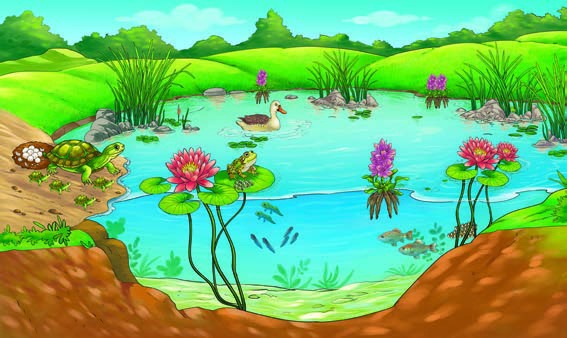
Frogs, turtles, snakes, dragonflies, mosquitoes, snails and ducks share the pond with algae, duckweed and lotus. Each species uses the same habitat in its own way. A night snake and a day rodent both live in a forest but face very different conditions, which lets them coexist.
1.3 Populations and communities
A group of organisms of the same kind living in one habitat is a population. Counting plants or animals in a marked patch of one square metre gives an estimate of how many live there at that place and time. Different populations living together make up a community.
A habitat rarely holds just one kind of organism. If it did, every member would need the same food, water and space, and competition would lead to shortage. Variety reduces this pressure because different species use resources differently.
1.4 From individual to ecosystem
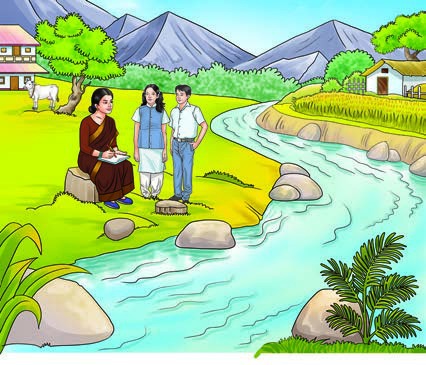
An ecosystem forms when a biotic community interacts with the abiotic components of an area. Aquatic ecosystems include ponds, rivers and lakes; terrestrial ones include forests, grasslands and farms. A single large banyan, mango or pilkhan tree can act as a small terrestrial ecosystem. Farmland is a human-made ecosystem. Ecosystems can overlap, as when a stream runs beside a forest and a field.
Biotic and abiotic parts affect each other. Sunlight, carbon dioxide and water let plants make food; soil supplies anchorage and nutrients; air supplies oxygen for respiration; water is essential for all life. In return, plants release oxygen, roots hold soil and reduce erosion, and vegetation keeps soil moist and cools the air.
1.5 Why habitats differ
Land and water place different demands on the organisms that live in them. A water animal can rely on water to support its body and to supply dissolved oxygen, while a land animal needs limbs or other ways to move and must avoid drying out. Plants rooted in soil need anchorage and a steady supply of water and minerals.
Even within one habitat, conditions change from place to place and from hour to hour. The sunny top of a tree is warmer and brighter than its shaded trunk; a pond edge is shallower and warmer than its middle. These small differences are why a single habitat can hold many kinds of organisms, each suited to its own patch.
1.6 A pond up close
A pond contains fish, frogs, turtles, snakes, dragonflies, mosquitoes, snails and ducks, along with algae, duckweed and lotus. Its abiotic parts include water, dissolved oxygen, sunlight, temperature and the mud at the bottom. The living and non-living parts are linked: fish eat small plants and animals and take oxygen from the water, while the plants use sunlight and dissolved nutrients to grow.
When a fish dies, its body is broken down by bacteria and fungi in the water and mud, and the nutrients return to the pond. The pond therefore recycles its own material, with the community and the physical conditions working together.
1.7 People and habitats
Farmland, fish ponds and parks are human-made habitats, created to meet human needs. They differ from natural habitats because they need constant care: crops are sown and harvested, ponds are stocked and cleaned, and parks are maintained. When such places are planned well, they can support biodiversity and reduce pollution.
Human activity can also damage natural habitats. Roads and buildings cut through forests, pollution changes water and air, and overuse removes resources faster than they can renew. Animals such as elephants then move into farms and villages, leading to conflict. Corridors and protected areas are ways of giving wildlife room to move and survive.