

Microbes at work and quick revision
The Invisible Living World16 min readLesson 4 of 5
4.1 Cleaning the environment
Fallen leaves and dead plants disappear from a garden after some time, and the same happens to animal waste. Microorganisms break these complex materials into simpler substances rich in nutrients, in a process called decomposition. The nutrients return to the soil and help new plants grow.
You can see a small version of this at home. Put some garden soil in a container, add fruit and vegetable peels, cover them with another layer of soil, and leave the container aside for two to three weeks. The peels break down into a dark, nutrient-rich material: manure. Fungi and bacteria do the work, and the process goes best at a suitable temperature and moisture level. This is why gardeners collect dry leaves and plant waste in pits: they are making natural manure.
4.2 Biogas and pollution busters
Many bacteria and fungi live in environments without oxygen. Some of them decompose plant and animal waste and release a mixture of gases called biogas, mainly carbon dioxide and a high proportion of methane. Biogas has been used as a fuel for cooking, heating, generating electricity and even running vehicles.
Microbes can also be trained to tackle pollution. Ananda Mohan Chakrabarty, a scientist who studied bacteria, in 1971 developed a bacterium able to digest oil from spills and so help clean polluted water and soil. The discovery got a patent in 1980, and his work demonstrated a use for microbes against environmental problems. India's scientific heritage also records early interest in these tiny organisms: the Vedas mention "Krimi", which covers both visible (Drishya) and invisible (Adrishya) tiny entities, along with their helpful and harmful effects.
4.3 Microbes in the kitchen
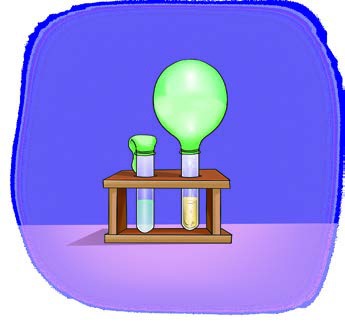
Yeast is a fungus that grows well in warm conditions and is used in baking. In an experiment, two bowls of flour are taken, sugar is added to both, and yeast is mixed into bowl A only. Both are kneaded with warm water and left covered in a warm place. After a few hours the dough in bowl A has risen, looks fluffy, and smells different from the dough in bowl B.
The reason is that yeast respires, breaking food down to get energy. In the process it gives off carbon dioxide, and the gas bubbles make the dough soft and spongy. A small amount of alcohol also forms, which gives the dough its different smell. This property makes yeast useful for breads and cakes, while bacteria such as Lactobacillus ferment the batter for idli, dosa and bhatura.
Curd works in a similar way. Warm milk is mixed with a little curd as a starter, and the milk is left in a warm place; cold milk is kept in a cool place for comparison. In the warm bowl the milk sets into curd and turns sour. Lactobacillus feeds on the sugar in milk, multiplies, and produces lactic acid, which makes curd sour. Warmth helps these bacteria grow, which is why the cold bowl changes much less. Salt and sugar help preserve pickles and murabbas because a high concentration of either discourages microbial growth.
4.4 Helpers in the soil and the water
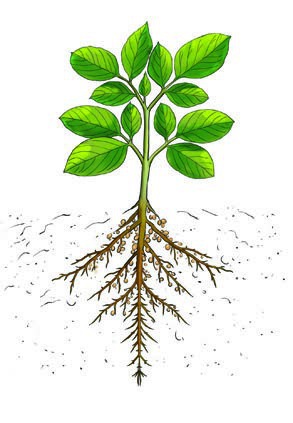
Rhizobium bacteria live in the swollen parts called nodules on the roots of legumes such as beans, peas and lentils. These bacteria take nitrogen from the air and turn it into a form the plant can use. Farmers rotate legumes with other crops, because the legumes leave the soil richer in nitrogen and reduce the need for chemical fertiliser.
Microalgae are tiny plant-like organisms found in water, soil, air and on tree surfaces. They make their own food with sunlight and release oxygen; together with other algae they produce more than half of the oxygen supply on Earth. They are rich in nutrients and form food for many aquatic animals. Some, such as Spirulina, Chlorella and diatoms, are taken by people as supplements and medicines, and microalgae also help clean water and can be used to make biofuel. Spirulina is called a superfood because it is rich in protein, with over sixty per cent of its weight as protein, and it is a good source of vitamin B12, with little fat or sugar. Pollution, climate change and habitat destruction threaten these organisms, so conserving them matters for food security and for the oxygen balance of the planet.
4.5 Common mistakes to avoid
- Thinking all microbes are harmful: many decompose waste, fix nitrogen, make food and produce medicines, while only some cause disease.
- Calling a virus a cell: viruses are acellular and multiply only inside a living host.
- Saying bacteria have a well-defined nucleus: bacteria have a nucleoid instead.
- Thinking every fungus is multicellular: yeast is a unicellular fungus, while moulds are multicellular.
- Putting a cell wall on an animal cell: the cell wall is found in plant, fungal and bacterial cells, not in animal cells.
- Expecting chloroplasts in fungi: fungi have no chlorophyll and cannot photosynthesise.
- Believing microbes live only in dirty places: they occur in water, soil, air, hot springs, snow, and inside our own gut.
Exam
Keep the three names straight: the cell membrane is the boundary, the cytoplasm is the jelly filling, and the nucleus controls the cell. For plant versus animal cells, write cell wall, chloroplast and large vacuole as the plant-only or plant-larger features. For microbes, remember that bacteria and protozoa are unicellular, fungi can be either, algae are plant-like, and viruses are acellular.
- Explain how lenses and microscopes helped people see microorganisms.
- Describe Hooke's cork observation and Leeuwenhoek's contribution.
- Name the three basic parts of a cell and state one function of each.
- Differentiate plant and animal cells using three features.
- Explain why cell shape is related to cell function, with two examples.
- List the levels of organisation from cell to organism.
- Describe two ways in which microorganisms help humans and the environment.