

Cells, batteries and quick revision
Electricity: Magnetic and Heating Effects17 min readLesson 4 of 5
4.1 The first battery: a Voltaic cell
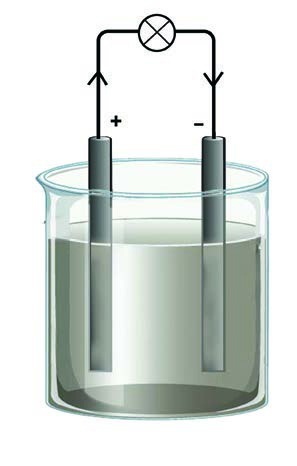
Portable electricity comes from cells and batteries. One of the earliest designs is the Voltaic cell, also called a Galvanic cell. It has two metal rods of different materials, called electrodes, partly dipped in a liquid called the electrolyte. The electrolyte is usually a weak acid or a salt solution, and the whole set-up sits in a glass or plastic container.
A chemical reaction between the electrodes and the electrolyte produces electricity. Once the circuit is closed, current leaves the positive terminal and travels around to the negative one. Over time the chemicals are exhausted, the cell stops working, and it is then called dead.
4.2 Galvani, Volta and a frog's leg
The names come from two Italian scientists. In the late 1700s, Luigi Galvani noticed that the leg of a dead frog twitched when it was brought into contact with two metals, copper and iron. He thought the electricity came from the frog. Alessandro Volta disagreed: he believed the metals and the liquid were responsible. To test the idea, he replaced the frog's leg with paper soaked in salt water and still obtained a current. That showed that a combination of metals and liquid could generate electricity, and it led to the first battery.
4.3 A cell made from lemons
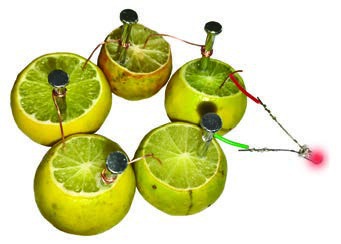
The chapter's activity shows the same idea with kitchen materials. Copper wire and an iron nail are inserted into a lemon, keeping the two metals apart. Each lemon becomes a small cell, with lemon juice as the electrolyte. Several lemons are joined in a series, and an LED is joined to the copper wire at one end of the chain and the iron nail at the other. A glowing LED shows that the cell works; if it does not glow, the LED connections are reversed, because an LED allows current only in one direction. Salt solution can replace lemon juice, and many metal pairs can be used, including zinc and copper, zinc and silver, aluminium and copper, and iron and copper.
4.4 Dry cells and rechargeable batteries
Voltaic cells proved the principle but are not convenient for daily use. Most everyday cells are dry cells. A dry cell has a zinc container that acts as the negative terminal, a carbon rod at the centre with a metal cap as the positive terminal, and a moist paste as the electrolyte. The paste is why it is called dry. A dry cell is a single-use cell: once its chemicals are spent, it is thrown away.
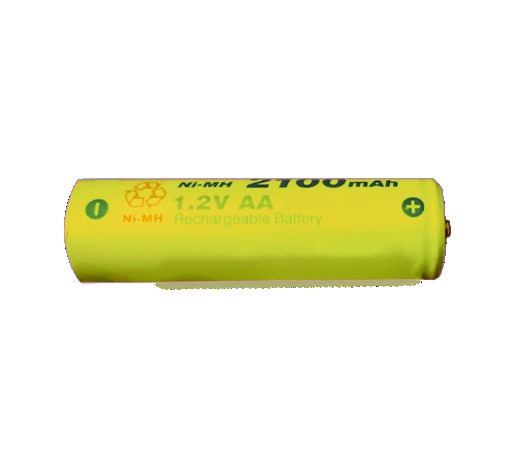
Rechargeable batteries can be charged and used again many times, which saves money and reduces waste. They appear in watches, phones, laptops, cameras, inverters and electric vehicles. Even these wear out after many charging cycles. The lithium-ion battery is the most common type today, and it depends on metals such as lithium and cobalt that are mined in only a few parts of the world. That is why recycling old batteries and developing new designs matter. Solid-state designs swap the liquid or paste electrolyte for a solid material and are being developed to be safer, faster to charge and longer lasting.
4.5 A dead battery is not harmless
Even a battery that no longer runs a device is not completely empty. It may still contain acids and metals such as lead, cadmium, nickel or lithium, which can cause fires or harm the environment if thrown into ordinary garbage. Many of these materials can be recovered and recycled. Used batteries should go to a proper e-waste collection point, and a teacher or local authority can advise where that is.
4.6 Common mistakes to avoid
- Thinking electricity and magnetism are unrelated: a current produces a magnetic field, and a moving magnet can produce a current.
- Calling an electromagnet a permanent magnet: it is magnetic only while current flows.
- Ignoring the iron core: inserting an iron core makes an electromagnet much stronger.
- Believing the number of turns makes no difference: more turns give a stronger magnet.
- Thinking all batteries can be recharged: dry cells are single-use, while rechargeable batteries can be reused.
- Forgetting the heating effect: current produces heat as well as magnetism, and that heat is useful in appliances but can be dangerous.
- Treating resistance as the same as insulation: resistance is the opposition a conductor offers to current, and it is what turns electrical energy into heat.
4.7 Exam reminder
Keep the three effects in order. A current has a magnetic effect (compass deflection, electromagnets), a heating effect (nichrome wire, heaters, filament), and a chemical source in cells and batteries (Voltaic cell, dry cell, rechargeable battery). For electromagnet strength, write the two controls: more current and more turns. For cells, write the two terminals and the electrolyte.
Exam
For a magnetic-effect answer, describe the compass experiment: current on, needle deflects; current off, needle returns; the field exists only while current flows. For an electromagnet, name the coil, the iron core, and the two ways to strengthen it. For the heating effect, name resistance and say that nichrome has higher resistance than copper, so it produces more heat for the same current.
- Describe the compass experiment that shows the magnetic effect of current.
- Explain what a magnetic field is and when it disappears.
- Explain how to make an electromagnet and two ways to strengthen it.
- Explain why an iron core makes an electromagnet stronger.
- Explain the heating effect of current and why nichrome is used.
- Name three factors on which the heat produced in a wire depends.
- Describe a Voltaic cell, a dry cell and a rechargeable battery.