

The heating effect of current
Electricity: Magnetic and Heating Effects14 min readLesson 3 of 5
3.1 A wire that gets warm
The chapter now turns from magnetism to heat. In this activity, a thin nichrome wire is fixed between two nails on a piece of cardboard and connected through a switch to a cell. Before the current is switched on, the wire feels cool. After the switch has been on for about 30 seconds, the wire feels warm. It should be touched only for a moment, and never held, because it can become hot enough to hurt.
3.2 Why the wire heats up
When current flows through a conductor, it meets some opposition, called resistance. Different materials resist the flow of current differently. A nichrome wire has a higher resistance than a copper wire of the same length and thickness, so more of its electrical energy is converted into heat. When current passes through a conductor and the conductor becomes warm, the process is called the heating effect of electric current. The effect is not a fault; it is the working principle of many appliances.
The amount of heat produced depends on several things. A larger current produces more heat, which is why two cells make the wire warmer than one. The material of the wire matters, as does its thickness, its length, and the time for which the current flows. In the chapter's extension activity, the same nichrome wire heats more with a battery of two cells than with one, for the same duration.
3.3 Heating appliances
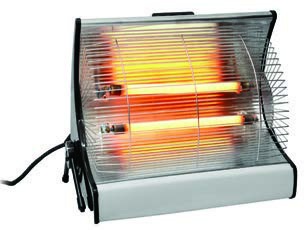
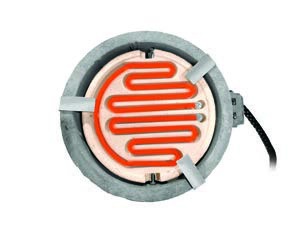
Many household devices work on this principle. Electric room heaters, electric stoves, kettles, irons, immersion rods and hair dryers all contain a heating element, usually a coil or rod of wire. An exposed element often glows bright red. An incandescent lamp works in the same way: its filament is heated by the current until it glows.
The heating effect also has industrial uses. A specially designed high-temperature electric furnace can melt scrap steel so that it can be recycled into usable steel. In all these cases, the aim is to turn electrical energy into heat in a controlled place.
3.4 Heat is useful, but it needs care
Heat is not always wanted. Some energy is lost as heat in wires during transmission. Overheating can damage plugs and sockets, melt plastic parts and even start fires. Household circuits include safety devices to reduce this risk, and appliances should use wires, plugs and sockets rated for the current they carry. Never touch a heating element, keep flammable material away from heaters, and switch off appliances that are not in use.
3.5 A closer look at resistance
Resistance is the opposition a material offers to the flow of current. It is not the same as insulation. An insulator blocks current almost completely, while a conductor such as nichrome allows current to pass but resists it enough to become hot. A thin wire has more resistance than a thick wire of the same material and length, and a longer wire has more resistance than a shorter one. That is why the short, thick copper wires in a circuit stay cool while a thin nichrome element glows.
The heat produced is the result of electrical energy changing into heat energy. A larger current means that more charge passes each second, so more energy is converted. The same reasoning explains why two cells heat the wire more than one cell, and why leaving the current on for longer makes the wire hotter.
3.6 Choosing a heating element
A heating element needs two qualities. It must have enough resistance to produce useful heat, and it must withstand high temperatures without melting or burning. Nichrome is a good choice because it has high resistance and can glow red hot for a long time. The element is often shaped as a coil so that a long length of wire fits in a small space and heat is spread over a useful area.
The visible glow of an element is a sign that it is converting electrical energy into heat and light. In an electric iron or a stove, the glow may be hidden inside the body of the appliance, but the heat still reaches the plate or the coil. The design of an appliance is largely a matter of moving that heat to where it is needed without letting it damage the rest of the device.
3.7 Electric heat versus burning fuel
Electric heating has clear everyday advantages. There is no flame, no smoke and no ash at the point where the heat is used, so a kitchen or a classroom stays cleaner and safer. The heat can be switched on and off instantly and adjusted, which is hard to do with a wood fire, and there is no fuel to store at home. The trade-offs are that the electricity must be generated somewhere, running costs can be high, and safe wiring is essential. A heater that draws more current than its socket is rated for can overheat the wiring. Used carefully, electric heating is convenient and clean; used carelessly, it is a fire risk.
3.8 Heat where it is needed
The design of an appliance decides where the heat goes. In a kettle, the element sits inside the water, so almost all the heat is transferred to the water. In an iron, the element heats a metal sole plate that is pressed against the cloth. In a hair dryer, a fan pushes air past the hot element so that the heat arrives as a stream of warm air. Thinking about where the energy goes explains why a kettle heats water quickly while a room heater takes much longer to warm a whole room.